






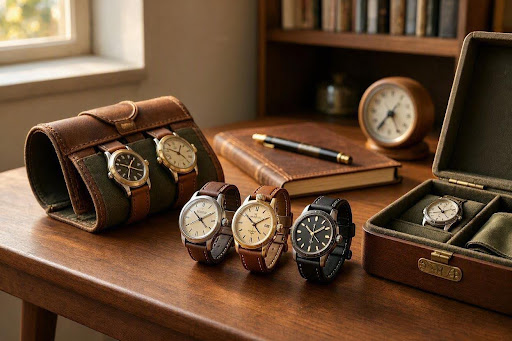
Something shifted in the watch world this year. Walk into any boutique or scroll through a collector forum and you’ll notice it immediately: cases are shrinking, dials are getting warmer and more textured, and the loud, oversized sports watch that dominated the last decade is quietly losing ground to something more restrained.
This isn’t a passing aesthetic phase. It reflects a genuine change in how people think about buying and owning watches. Collectors are slowing down, researching more, and choosing pieces they expect to keep for decades rather than trade in next season. And that shift brings a question a lot of watch owners haven’t had to think about in a while: how do you actually look after a growing, more considered collection?
The Industry Is Rethinking What “Luxury” Means
At this year’s major watch fairs, brands weren’t chasing bigger complications or bolder marketing stunts. The conversation centred on smaller case sizes, historically inspired designs, and a return to pieces that feel personal rather than performative. Cases between 36mm and 39mm, once dismissed as “too small” during the oversized-watch era, are now the sweet spot for buyers who want comfort, versatility, and a design that references watchmaking history rather than shouting for attention.
Industry executives gathering in Geneva this September openly acknowledged that the old playbook — simply raising prices and releasing new references every year — has hit its limits. Buyers, especially younger ones, are pushing back on hype-driven purchasing and asking harder questions before they commit. The result is a market that values coherence, craftsmanship, and long-term appeal over novelty for its own sake.
Why Vintage-Inspired Design Is Winning Right Now
A few forces are driving this shift at the same time.
Buyers are more informed than ever. Collectors now research movements, provenance, and resale value before spending a significant amount of money. That research tends to favour classic proportions and proven designs over experimental releases.
Smaller watches suit more people, more often. A 38mm dress watch works under a cuff, on a smaller wrist, and across both casual and formal settings in a way a 44mm diver simply doesn’t. Versatility has become a real selling point again.
Vintage design carries emotional weight. A dial finish or case shape that echoes a brand’s archive gives a watch a story. For a generation of buyers who value individuality and meaning over status symbols, that story matters as much as the specification sheet.
Watches are being bought as considered purchases, not impulse buys. Rising prices have naturally slowed down decision-making. People are choosing fewer watches, but choosing them more deliberately, which tends to favour timeless design over trend-chasing.
None of this means investment-grade complications or bold materials have disappeared — they haven’t. But the centre of gravity has moved toward pieces that feel intentional, wearable, and built to last.
What This Means for How You Store and Protect Your Watches
Here’s the part that doesn’t get talked about enough: as collections become more considered, the way people store and maintain them needs to grow up too.
A single everyday watch tossed in a drawer is one thing. A small, curated collection of two, three, or more pieces — each chosen deliberately, each with real value attached — is a different situation entirely. Scratched crystals, tangled straps, and dust buildup are avoidable problems, but only if storage becomes part of the plan rather than an afterthought.
This is exactly the gap the team at Aevitas work with collectors to close. As more people move toward smaller, more meaningful collections rather than one or two flashy pieces, proper storage stops being a nice-to-have and becomes a genuine part of protecting the investment.
Display Versus Protection: Choosing the Right Case
Not every watch needs the same treatment. A vintage-inspired dress watch you wear weekly has different needs than a special-occasion piece you want to keep pristine for years.
For watches you rotate regularly, a well-ventilated box with soft, non-abrasive cushions protects the case and crystal from everyday scuffs while keeping straps from creasing or drying out. For pieces you want to showcase, a case with a clear viewing panel lets you enjoy the design without opening it up and handling the watch unnecessarily, which reduces wear over time.
Aevitas UK’s Watch Boxes range covers both of these needs, from compact single-watch cases to larger multi-slot boxes designed for growing collections. Choosing the right size from the start also saves you from having to rebuy storage every time you add a new piece, which is worth planning for if you expect your collection to expand.
Keeping Automatic Watches Running Between Wears
The renewed interest in vintage-style watches has brought automatic movements back into focus too, and automatic watches come with a maintenance quirk that quartz watches don’t: they run on the motion of your wrist, so a watch left sitting stops keeping time and needs resetting every time you pick it up.
For a single automatic watch worn most days, this isn’t a big deal. But once you own two or three automatics and wear each less often, resetting the time, date, and sometimes even complications like a moonphase every time you switch watches gets old fast — and repeated manual winding puts unnecessary strain on the crown and stem over years of use.
This is where a watch winder earns its place. A good winder keeps an automatic movement gently in motion when it’s not being worn, so the watch is ready to go the moment you pick it up, with the date and time already correct. It also means the mainspring stays consistently lubricated rather than sitting still for weeks at a time, which some watchmakers consider better for long-term movement health.
If you’re weighing up display cases against something with more active protection, it’s worth comparing the options properly before you buy — you can read more here on how different display case styles balance visibility, protection, and practicality for a growing collection.
Building or Refreshing a Collection the Right Way
If this trend has you rethinking your own watch box, a few practical habits go a long way.
Start with how you actually wear your watches, not how you want to. If you rotate three watches weekly, buy storage sized for that rotation, not for a future 12-piece collection you may never reach.
Keep humidity and direct sunlight in mind. Vintage-style dials, especially those with lacquered or textured finishes, can fade or degrade faster in direct light. A case stored away from a sunny windowsill will keep colours and finishes looking sharp for years longer.
Service before you store long-term. If a watch is going into storage for an extended period, a quick service check beforehand catches small issues — a drying gasket, a slightly worn strap — before they become expensive ones.
Don’t over-wind by hand if you own an automatic. Manual winding an automatic watch that also self-winds can, over years, add unnecessary wear. A winder set to the correct turns-per-day and direction for your specific movement is a gentler long-term approach.
The broader industry data backs up why this matters. According to Bloomberg’s <a href=”https://www.bloomberg.com/news/articles/2026-09-05/luxury-watchmakers-say-gen-z-buying-trends-call-for-bold-changes”>coverage of this year’s Geneva watch gathering</a>, brands themselves are acknowledging that buyers are holding onto pieces longer and expecting them to perform as genuine long-term assets rather than disposable trend purchases. If the watches themselves are being built and bought to last, the way they’re stored and maintained should reflect that same mindset.
Final Thoughts
The return of smaller, vintage-inspired watches isn’t just a design trend — it’s a sign that collectors are treating their watches as long-term pieces worth real care. A collection built with intention deserves storage and maintenance that matches that intention. Whether that means a proper display case, a dedicated winder, or simply rethinking how you store the watches you already own, the goal is the same: protect what you’ve chosen carefully enough that it lasts as long as you plan to keep it.
FAQs
Why are smaller watch cases becoming popular again in 2026? Buyers are prioritising comfort, versatility, and classic proportions over the oversized sports-watch look that dominated previous years. Smaller cases, typically 36mm to 39mm, suit more wrist sizes and work across both casual and formal settings.
Do vintage-inspired watches hold their value better than modern designs? There’s no guarantee with any watch, but classic proportions and proven designs tend to have broader long-term appeal, which can support resale demand compared to trend-driven pieces that fall out of fashion.
How many watches do I need before I should invest in proper storage? Even a single automatic watch benefits from a proper case to protect it from dust and scratches. Once you own two or more pieces, dedicated storage becomes much more important simply to keep straps, crystals, and finishes in good condition.
Do I need a watch winder if I only own one automatic watch? Not necessarily. If you wear that watch daily, the natural motion of your wrist keeps it running. A winder becomes genuinely useful once you own multiple automatics and wear each one less frequently.
What’s the difference between a watch box and a display case? A watch box is generally built for protection and everyday storage, often with a solid lid. A display case includes a clear viewing panel so you can see the watch without opening the case, which suits pieces you want to showcase without handling them often.

