






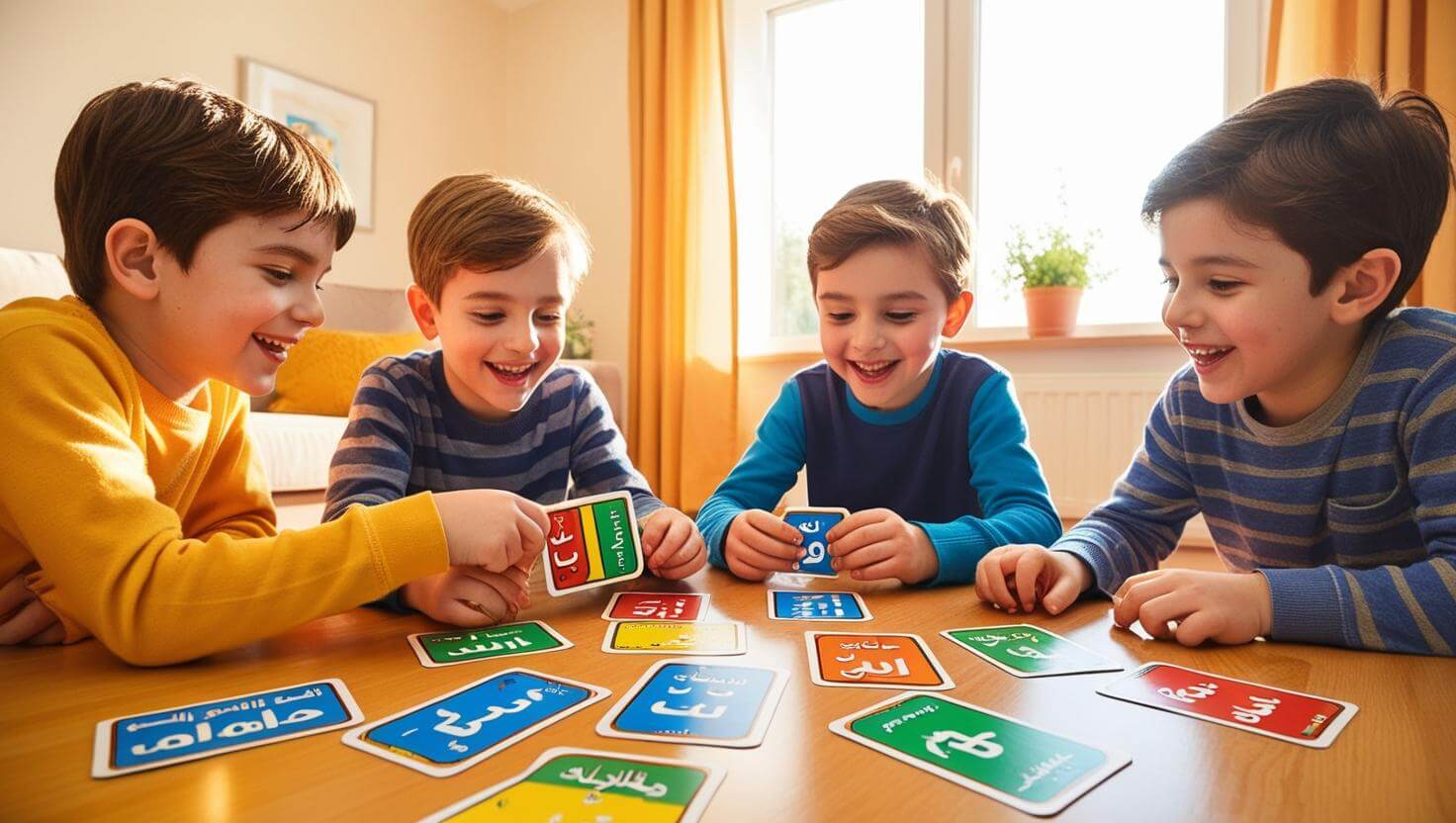
Teaching Arabic at home can be rewarding and challenging, especially for homeschooling parents who want to make the Arabic learning process engaging. Traditional methods, such as rote memorisation and textbook exercises, can be boring. Most parents find it hard to keep their kids motivated, especially when Arabic is not the family’s first language.
One of the most effective ways to teach Arabic at home is through Arabic language games. Studies have shown that learning through games enhances memory retention, boosts motivation, and makes the learning process easier. This blog post will explore why games are the best way to teach Arabic at home and how you can incorporate them into your daily routine.
Learning Through Games
Games are not just for fun, they can also be used as learning tool that enhances the way children learn languages. The research in cognitive psychology suggests that learning through games improves retention, engagement, and comprehension. When children are actively involved in a game, their brains release dopamine, a feel-good neurotransmitter that plays a key role in pleasure, reward and motivation. This will, in turn, help them associate learning Arabic with fun or pleasure rather than stress.
Using interactive learning methods—such as games—stimulates multiple areas of the brain, strengthening long-term memory and language recall. Instead of simply memorizing Arabic words or letters, kids apply their knowledge in real time, which reinforces their understanding and boosts their confidence.
Also, with Arabic language games, kids can learn Arabic words in practical situations. This makes it easier for them to remember and use Arabic in everyday conversations.
How Arabic language games make Arabic learning effective
Games can transform your Arabic learning into an interactive experience, making it easier for children to grasp and retain information. Here’s how:
1. Engaging
Children naturally enjoy playing, so using games reduces resistance to learning. Instead of dreading Arabic lessons, they become excited to participate. Games add a sense of challenge and reward, keeping kids interested for longer periods.
2. Reinforcement through repetition
Repetition is key to language learning, but traditional rote memorization can be boring. Games like matching cards, memory challenges, and interactive quizzes can help reinforce Arabic vocabulary and grammar. By repeatedly encountering words and letters in different contexts, children absorb information without feeling like they are studying.
3. Real-life application
Arabic words and conversation games encourage children to use the language in practical situations rather than just memorizing isolated words. For example:
- Role-playing games help children practice speaking.
- Story-building games encourage sentence formation and creativity.
- Guessing games improve listening and comprehension skills.
Types of Arabic Language games to try at home
Incorporating games into Arabic learning helps children absorb the language naturally while having fun. Here are some Arabic language games that you can try at home.
1. Arabic Alphabet Games
Mastering the Arabic alphabet is the first step in learning the language. These games help kids recognize letters and their sounds in an interactive way.
- Letter scavenger hunt: Hide Arabic letter cards around the house and have your child find and pronounce them.
- Flashcard matching: Create flashcards with Arabic letters on one side and corresponding images on the other. Kids can match letters to pictures or play memory games.
- Sensory writing games: Let kids trace letters in sand, flour, or shaving cream to make learning hands-on.
2. Arabic word games
Once children know the alphabet, they can start forming words with these fun activities;
- Word search and crossword puzzles: Print your Arabic word puzzles to help your child recognize new vocabulary.
- “Guess the word” (Charades in Arabic): Act out or draw words in Arabic while others guess.
- Building words with letter tiles: Use letter blocks or cut-out letters to help kids construct Arabic words.
3. Speaking and listening games
Speaking and listening are important for fluency. Try these interactive games:
- Storytelling chain game: Each player adds a sentence to a story, using a new Arabic word each time.
- Simon says (in Arabic): A great way to teach verbs and action words.
- Describe the object: Blindfold your child and have them touch an object, then describe it using Arabic words.
Conclusion
Teaching Arabic at home doesn’t have to feel like a chore—games make it fun, interactive, and highly effective. By incorporating Arabic alphabet games, word puzzles, and speaking activities into daily learning, children can develop a strong foundation in the language without the stress of traditional memorization methods.
Instead of long, structured lessons, parents can introduce short, engaging games throughout the day. For example, a quick flashcard match before breakfast, a storytelling game after lunch, or a word scavenger hunt in the evening keeps learning fresh and exciting. Mixing offline and online games also helps maintain interest while reinforcing vocabulary, pronunciation, and comprehension.

