






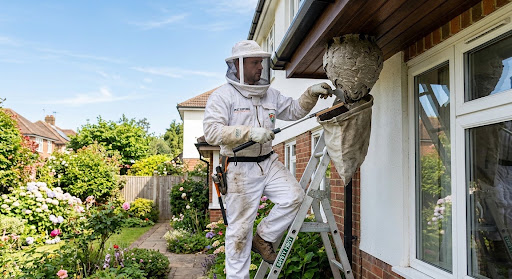
Nobody wants to discover a wasp nest the hard way. One minute you’re grilling burgers or pulling weeds, and the next you’re swatting away angry insects that seem determined to ruin your afternoon. If you’ve noticed more wasps buzzing around your property lately, there’s a good chance a nest is growing somewhere close by, and it’s only getting bigger by the day.
Wasps aren’t like the occasional fly that wanders into your kitchen. They’re territorial, they communicate danger to each other, and a single nest can house hundreds of aggressive insects by late summer. Understanding how these nests form, why they show up in the first place, and what to do once you spot one can save you from painful stings and a summer spent avoiding your own backyard.
Why Wasps Choose Your Property in the First Place
Wasps are drawn to spaces that offer shelter, warmth, and easy access to food. Eaves, attics, sheds, and even the gaps behind siding make ideal real estate for a queen wasp looking to start a colony in spring. She’ll build a small starter nest, lay her first batch of eggs, and once those eggs hatch into worker wasps, the whole colony gets to work expanding it.
By midsummer, what started as a golf-ball-sized structure can grow into something the size of a basketball, packed with wasps that are quick to defend their home. Sweet drinks, exposed trash, and even brightly colored clothing can attract foraging wasps to your yard, giving them more reason to stick around and nest nearby.
The Real Risk of Ignoring a Wasp Nest
It’s tempting to leave a nest alone if it’s tucked away in a corner of the yard you rarely visit. Unfortunately, wasps don’t stay confined to one small area. As the colony grows, workers range farther in search of food, which means encounters become more frequent over time, not less.
For most people, a wasp sting causes temporary pain and swelling. But for those with allergies, a sting can trigger a severe reaction that requires immediate medical attention. Multiple stings from an agitated swarm can also overwhelm even a healthy adult, especially if the nest is disturbed accidentally by a lawnmower, a curious pet, or kids playing outside.
Signs You Likely Have a Wasp Nest Nearby
A few telltale clues can help you confirm what you’re dealing with before it gets out of hand:
- Increased wasp activity around a specific area of your yard, especially near rooflines, sheds, or trees
- Papery, gray structures tucked into eaves, attic vents, or dense shrubs
- Visible flight paths, where wasps seem to fly in and out of the same spot repeatedly
- A faint buzzing sound coming from walls or enclosed spaces, which can indicate a nest built inside a cavity
If any of these sound familiar, the nest has likely been established for a while and is only going to keep growing.
Why DIY Removal Often Backfires
A quick search online will turn up plenty of home remedies for getting rid of wasp nests, from soapy water sprays to store-bought aerosol cans. While these methods might work on very small, newly formed nests, they come with real risks once a colony is established.
Disturbing a mature nest without the right protective equipment can provoke a mass defensive response from the entire colony, not just a few individual wasps. People have ended up with dozens of stings from a single misjudged attempt at DIY removal, and in some cases, the nest survives the attempt and simply rebuilds elsewhere on the property.
There’s also the issue of location. Nests built inside wall cavities, attics, or underground burrows are nearly impossible to treat effectively without specialized tools, and incomplete removal often means the problem returns within days.
How Professional Wasp Nest Removal Protects Your Home and Family
Wasp nest removal handled by trained professionals gives you the peace of mind that comes with knowing the job is done safely and completely, without putting yourself or your family at risk. At Critter Stop, our technicians come equipped with the protective gear, specialized tools, and product knowledge needed to locate nests in hard-to-reach spots, from attic corners to underground cavities, and remove them without triggering a dangerous swarm response.
Rather than just knocking down the visible nest, our team identifies the entry points wasps are using and treats the surrounding area to discourage new colonies from forming in the same spot. This kind of thorough approach makes a real difference compared to a one-time spray that only addresses what’s visible on the surface.
Every property is different, which is why our technicians take the time to assess the specific type of wasp, the size and location of the nest, and the layout of your home before deciding on the safest removal method. Whether you’re dealing with paper wasps under a porch roof or a larger colony tucked into your attic, we tailor our approach so the nest is fully eliminated rather than temporarily disturbed.
Keeping Wasps from Coming Back
Removing an existing nest solves the immediate problem, but keeping wasps away long-term takes a bit of ongoing attention. A few simple habits can make your property less appealing to new queens looking for nesting spots:
- Seal cracks and gaps around your home’s exterior, especially near rooflines and vents
- Keep outdoor trash cans tightly covered and away from seating areas
- Trim back dense shrubs and overgrown vegetation where nests can form undetected
- Check eaves, sheds, and outdoor furniture periodically for early signs of nest-building activity
Catching a new nest early, while it’s still small, makes removal far easier and significantly less risky than waiting until it’s fully established.
Don’t Let a Wasp Nest Take Over Your Summer
A backyard should feel like a place to relax, not a space you’re constantly watching for stinging insects. If you’ve spotted a nest forming or noticed unusual wasp activity around your home, addressing it sooner rather than later is always the safer choice.
Critter Stop’s team is ready to help you reclaim your outdoor space with safe, effective wasp removal services tailored to your property. Reach out today to schedule an inspection and take the first step toward a wasp-free summer.

