

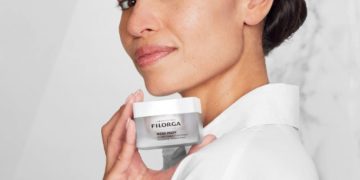






So you’ve probably heard someone mention “Filorga filler” at some point — maybe in a clinic waiting room or a late-night beauty forum rabbit hole you fell into. And maybe you wondered if the brand behind it — Laboratoires Filorga — is actually as sophisticated and Paris-dermatology-chic as people make it sound.
I remember the first time I saw a Filorga jar (the matte glass one… you know the one). I honestly thought it looked kind of fake, like a prop someone forgot to remove from a movie set. Then I touched it and went, oh okay, this is… cold. Heavy. Real. French.
Anyway — you’re here because you want the messy, real-person version of the Filorga anti-aging range. Not a brochure. Not a “timeless radiance” cliché. Just what it feels like to actually use this stuff, what works, what maybe doesn’t, and why people swear by it.
Before we dive in, a few expert quotes that float around in the science-y corners of the skincare world:
- “Peptides combined with hyaluronic acid can improve skin hydration and elasticity within weeks.” — American Academy of Dermatology
- “Topical antioxidants remain one of the strongest lines of defense against premature aging.” — Harvard Medical School
- “Retinol is still the most evidence-backed ingredient for smoothing fine lines.” — Mayo Clinic
- “Regular exfoliation encourages skin turnover and allows actives to penetrate more effectively.” — Cleveland Clinic
These aren’t Filorga-specific, but they DO describe the backbone of their formulas.
What Makes Filorga… Filorga?
If you look through the range, you’ll see the word “NCEF” everywhere. It stands for “New Cellular Encapsulated Factors,” which sounds a bit like sci-fi nutrition for robots, but it’s basically:
- vitamins
- amino acids
- minerals
- coenzymes
- hyaluronic acid
…all blended into something that’s supposed to echo aesthetic-medicine-style mesotherapy.
Do you need all of that? Maybe. Maybe not. Honestly, half the time I don’t know if my skin wants nourishment or just a nap.
Filorga is one of those brands that sits between drugstore skincare and clinical treatments — not as intimidating as an in-office procedure, not as casual as a random gel cream from a supermarket shelf.
And that’s kind of the style you get with French dermatology brands: scientific yet wearable, strict yet romantic (in a very non-romantic, clinical way).
The Core Products People Actually Talk About
1. Time-Filler (the OG)
Fine lines. Crow’s feet. Those little neck creases that show up after one bad night of sleep (or after scrolling TikTok in bed for an hour with your chin to your chest… been there).
Time-Filler is thick — like, “sits there until it decides it’s ready” thick. It has peptides, hyaluronic acid, and plant extracts, and the whole vibe is “relax the micro-tensions of the skin,” which sounds dramatic but okay.
My experience? The first couple of nights I felt like I’d put frosting on my face. Then after a week I started noticing my under-eye area looking a little less… crumpled.
2. NCEF-Intensive Serum
This one is lightweight, and honestly, it smells like something a Parisian dermatologist would approve of — clean, slightly medicinal but not in a punishment way.
What it does:
- boosts radiance
- adds hydration
- gently resurfaces
What it doesn’t do:
- magically erase wrinkles (sorry, nothing does)
But it’s one of those serums that makes your skin look like you slept 3 extra hours — even when you definitely did not.
3. Optim-Eyes
Eye creams are controversial. Some people think they’re essential; others think they’re basically moisturizer in a smaller tube.
Optim-Eyes is somewhere in the middle. It targets:
- dark circles (the stubborn bluish ones especially)
- puffiness
- fine lines around the eye socket
If you store it in the fridge, it feels extra satisfying — like a tiny cold compress for your tired 3 p.m. face.
4. Scrub & Mask (the fun one)
This is the product you pull out when you want instant results or when you want someone to think your skincare routine is more advanced than it really is.
It exfoliates (step 1), then turns into this oxygen-foamy thing (step 2). Bubbles everywhere. It feels silly but in a good way — like skincare cosplay.
And afterward, your face looks bright. Not “photoshoot bright,” but awake.
Pros & Cons (because everything has them)
Pros
- Strong clinical formulations without being aggressive
- Good textures (seriously, very sensorial)
- French-dermatology credibility
- Noticeable results over time
- Packaging that looks amazing on a bathroom shelf
Cons
- Not cheap (your wallet may complain)
- Some products have fragrance (not ideal for sensitive types)
- Results are real but not magical
- You may end up wanting multiple products, which becomes a situation
A Quick Table Because Sometimes You Just Want Clarity
| Product | Best For | Texture | Why It’s Good |
| Time-Filler | Lines & firmness | Thick cream | Peptides + hyaluronic acid combo |
| NCEF-Intensive | Dull or tired skin | Lightweight serum | Multivitamin-like nourishment |
| Optim-Eyes | Puffiness, dark circles | Gel-cream | Fast-absorbing, de-puffing peptides |
| Scrub & Mask | Quick glow | Foam mask | Two-step exfoliation + oxygenating effect |
Pro Tips (You’ll Actually Use)
Pro Tip 1:
If you’re using Time-Filler and NCEF-Intensive together, apply the serum first and wait a minute or two. Filorga textures layer best when they can settle slightly.
Pro Tip 2:
If you travel (especially somewhere humid or unpredictable), bring Optim-Eyes — the small size makes it easy, and tired-traveler-face is a thing. I once used it after a long red-eye, and it worked better than my espresso. Well, almost.
But… What About the “Filorga Filler” Vibe?
Okay, so here’s the thing: Filorga started in aesthetic medicine before it became a skincare brand. Their reputation for “filler-like results” in creams is kinda exaggerated — no topical can replicate injectable hyaluronic acid.
But Filorga does mimic some effects of aesthetic procedures, like:
- increased hydration
- plumping of fine lines
- smoother texture
- more even tone
Think of it like this:
Injectables are renovation; Filorga skincare is maintenance. Both have a place.
And honestly, sometimes maintenance is all you want. Or all you can budget for. Or all you feel brave enough to try.
Are There Trade-offs?
Absolutely. Always.
If you want heavy-hitting actives (retinoids, pure vitamin C, strong acids), Filorga is milder. It’s not a “my face is peeling but I will emerge reborn” type of brand.
Instead, it’s more:
“I want real results, but I also want to enjoy applying my skincare and not fear it.”
That’s a valid choice. A very French choice, frankly.
Using Filorga Day-to-Day
Morning:
You probably want something lighter — NCEF-Intensive or Optim-Eyes. Maybe a sunscreen afterward, obviously.
Night:
This is when Time-Filler shines. Massage it a bit. Pretend you’re doing a fancy spa routine even if you’re just standing in terrible bathroom lighting in your oldest pajamas.
Weekly:
Scrub & Mask — because the bubbles make you feel like you’re doing something advanced even if you’re not.
If you’re the type who forgets steps (I do, constantly), Filorga is forgiving. You don’t have to follow a perfect 12-step thing. Just use what feels right.
One More Small Personal Note
The first time I tried Scrub & Mask, the foam started forming and I panicked for a second thinking it was reacting badly with something else I’d used. Then I remembered: Oh right, it’s supposed to do that. Classic me — worrying about imaginary disasters in my bathroom.
Final Thoughts
So where does all of this leave you?
Filorga is a bit like that friend who’s polished but not intimidating… elegant but still approachable. It doesn’t scream for attention, but you notice when it’s working. And even though the brand is grounded in aesthetic medicine heritage, it somehow manages to feel soft, maybe even comforting.
Is it perfect? No. Nothing in skincare is. But if you want formulas that walk the line between science-backed and pleasurable to use, and if you like the whole French-dermatology-meets-luxury vibe, Filorga is probably worth trying.
Maybe you’ll love everything. Maybe you’ll love just one product. Maybe, well, you’ll try it once and move on. That’s okay. Skincare is personal. Messy. Evolving.
But if you’re curious — genuinely curious — this is a range that rewards curiosity.
And sometimes… that’s the best place to start.

