






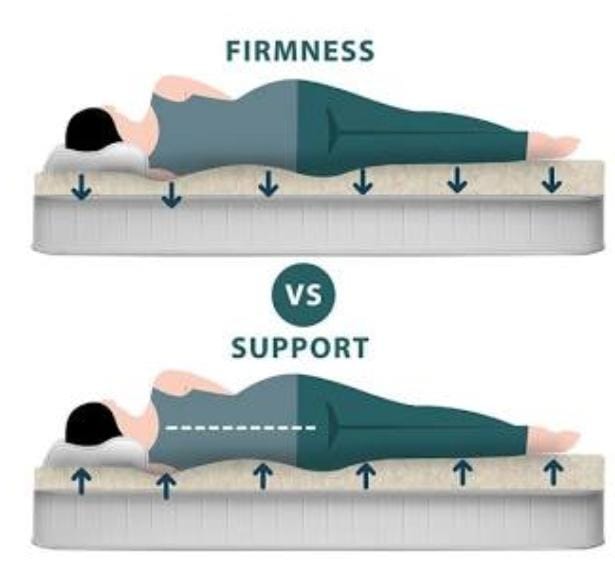
We spend roughly a third of our lives asleep, yet the physical mechanics of sleep environments remain widely misunderstood. Most consumers approach buying a bed as a purely aesthetic or surface-level comfort decision. In reality, purchasing sleep surfaces should be viewed through the lens of bio-mechanics and structural engineering.
The human skeletal system does not power down when we sleep. Instead, muscles relax, leaving our spinal health almost entirely dependent on the structural integrity of the surface beneath us. Poor sleep choices lead to chronic micro-strains on the lumbar vertebrae, restricted blood circulation, and disrupted sleep cycles.
This comprehensive guide breaks down the core principles of sleep science, material engineering, and spatial optimization to help you build an ideal, science-backed sleep environment.
1. The Anatomy of Spinal Alignment
The primary medical objective of a sleep surface is simple: maintain the spine’s natural curve (the lumbar lordosis) while relieving pressure on the shoulders, hips, and joints.
When a person lies down, weight distribution is wildly uneven. The thoracic (upper back) and pelvic (hips) regions carry the vast majority of human body weight. If a sleeping surface is too soft, the hips sink deeper than the rest of the body, creating a “hammocking” effect that hyper-extends the lower back muscles. Conversely, if a surface is too firm, the shoulders and hips bear intense concentrated pressure, cutting off local capillary blood flow and forcing the sleeper to toss and turn to find relief.
To achieve true equilibrium, modern sleep science relies on the concept of progressive contouring. A high-performing surface must feature a soft comfort layer to cushion immediate pressure points, paired with a resilient, firm support core that pushes back against heavy body mass. Without this multi-tiered resistance, muscles stay under continuous low-level tension all night, leading to chronic morning stiffness and long-term joint inflammation.
2. Decoupling Material Engineering: Memory Foam vs. Latex vs. Coir
Selecting a mattress requires a deep understanding of core material properties. Every composition addresses distinct ergonomic needs.
High-Density Memory Foam
Originally engineered by NASA, viscoelastic memory foam reacts dynamically to body heat and weight. This material contours perfectly to individual anatomical curves. By distributing weight evenly across a larger surface area, memory foam minimizes pressure spikes on the pelvic and shoulder girdles. It is highly recommended for side sleepers and individuals struggling with joint pain.
Open-Cell Latex
Derived naturally from rubber trees, latex foam provides an open-cell structure that delivers immediate, buoyant pushback. Unlike memory foam, which allows a deep sink-in feeling, latex keeps the sleeper positioned on top of the bed. This structural property offers two major benefits: excellent airflow that prevents heat retention, and effortless movement for individuals who shift positions frequently during the night.
Rubberized Coir
Commonly used in premium multi-layered architectures, coir is crafted from natural coconut husk fibers infused with liquid latex. This creates a highly breathable, rigid support matrix. Coir acts as an exceptional base layer, providing natural ventilation and preventing the mattress from sagging over years of heavy use.
3. Optimizing Whole-Room Ergonomics and Bed Sizing
While material science governs internal structural health, spatial layouts dictate environmental comfort. A bedroom should serve as a low-stress sensory sanctuary. Crowding a room with an oversized bed frame ruins visual balance and restricts room movement, raising cortisol levels before sleep.
When auditing a bedroom layout, designers use the 60-30-10 rule for floor space: 60% should be dedicated to major furniture and walking paths, 30% left entirely open for easy movement, and 10% allocated for storage.
If a master bedroom is expansive, a large king or queen setup fits comfortably. However, for guest rooms, studio apartments, multifunctional home offices, or children’s rooms, large beds quickly overwhelm the space. In these compact layouts, shifting to a single-occupant footprint is the most practical choice.
4. Selecting the Right Surface for Every Layout
Whether designing a master suite or optimizing a studio apartment, choosing specialized sleep products from reputable, legacy brands ensures you get a safe, durable product.
Main Bedrooms and Shared Spaces
For shared master bedrooms or single adults who prefer sprawling space, a full-sized setup is essential. Investing in a premium mattress from the Duroflex collection provides a masterclass in orthopedic support. Their doctor-recommended designs feature advanced multi-zone support layers tailored to balance varying body weights. This structural engineering ensures that even when a partner tosses and turns, kinetic energy is absorbed locally, allowing both sleepers to stay deeply asleep in their respective REM cycles.
Compact Spaces and Single Layouts
For smaller room footprints, choosing an scaled-down bed frame should never mean settling for cheap, low-grade foam. Sourcing a high-performance single bed mattress from Duroflex allows you to maximize room ergonomics without compromising on orthopedic technology. These specialized single mattresses utilize identical high-density foams and certified support matrices as their larger counterparts. This makes them an exceptional choice for growing children, teenagers, and solo professionals who need elite body contouring and spinal health within a compact space.
5. Maximizing Your Sleep Environment Investment
A high-quality sleep setup is a long-term medical investment. To preserve its structural integrity and ensure it continues to provide healthy alignment for a decade, practice regular mattress maintenance:
- Rotate Regularly: Rotate the mattress 180 degrees every 3 to 6 months. This ensures body weight is distributed across different areas over time, preventing permanent dipping where your hips sit.
- Use a Rigid Base: Ensure your bed frame features a solid, unyielding surface or closely spaced slats (less than 3 inches apart). Weak or sagging slats destroy mattress alignment and void warranties.
- Control the Micro-Climate: Keep room humidity below 50% and use breathable cotton bedding to prevent moisture from settling inside the core foam structures.
Ultimately, sleep quality shapes your daytime productivity, emotional balance, and physical health. By pairing rigorous material engineering with proper room spatial design, you build a sustainable foundation for long-term health and well-being.

