






The Dallas – Fort Worth metroplex is home to roughly 8.5 million people, making it the fourth-largest metro area in the country. With that scale comes a real, persistent need for addiction treatment that people can actually trust. Whether you are looking for yourself or someone you love, the number of facilities spread across North Dallas and its surrounding communities can make the decision feel impossible. Not every rehab serves the same person – some focus on intensive medical detox and round-the-clock residential care, others build their programs around flexible outpatient schedules that work around a job, and a few operate as hospital-affiliated behavioral health units for the most complex cases. This guide cuts through the noise with a ranked, criteria-driven shortlist of the seven best drug and alcohol rehab centers near Dallas, TX, judged on levels of care, accreditation, insurance acceptance, therapy modalities, facility environment, and proximity to the city.
Our top pick is Discovery Point Retreat for individuals and families who want a genuine full continuum of care – medical detox, residential inpatient, and structured aftercare planning – inside an accredited, insurance-accepting facility that never feels like a hospital ward. It pairs evidence-based therapies such as CBT, DBT, and art therapy with same-day admissions and a comfortable ranch-style setting about 30 miles south of Dallas in Waxahachie. For those who need to keep working or caring for family during treatment, Arise Recovery Centers is the strongest outpatient alternative. And for anyone requiring medically supervised psychiatric stabilization alongside addiction treatment, Medical City Green Oaks Hospital is the right specialist call.
Below, each of the seven facilities is ranked and tagged with a clear “best for” segment so you can match your situation – level of care, budget, insurance, and location – to the right option on your recovery journey.
What to look for
Before we get to the rankings, here is how we evaluated each facility. The same six criteria were applied to every treatment center to keep the comparisons honest.
Levels of care offered
The strongest programs span the full continuum – detox, residential inpatient, and aftercare support – so patients don’t have to change providers mid-recovery. We noted where a facility offers only one slice (outpatient-only, for example).
Accreditation and clinical credibility
We prioritized accredited facilities staffed by qualified health professionals. Accreditation signals adherence to recognized clinical standards, not just marketing polish.
Insurance acceptance
Cost is often the biggest barrier to entry. We favored treatment facilities that accept insurance or offer nonprofit sliding-scale options.
Therapy modalities
We looked for evidence-based approaches – CBT, DBT, and related modalities – plus co-occurring mental health support, rather than vague promises.
Treatment environment
Setting matters. Some recovery centers feel clinical and medical; others feel like a retreat. Neither is “better” – it depends on the individual.
Proximity to Dallas
Finally, we weighed geographic access across the Dallas metro and surrounding areas, from urban outpatient clinics to residential campuses 30 – 40 miles out.
At-a-glance overview
| Provider / Option | Best for |
| Discovery Point Retreat | Full-continuum residential care near Dallas |
| Arise Recovery Centers | Outpatient addiction treatment in Dallas |
| Nexus Family Recovery Center | Women and family-centered recovery |
| Homeward Bound, Inc. | Nonprofit behavioral health and recovery support |
| Riverwalk Ranch | Residential treatment in a Texas retreat setting |
| Trinity River Recovery | Insurance-friendly addiction treatment in Dallas |
| Medical City Green Oaks Hospital | Hospital-based behavioral health treatment |
The 7 best drug & alcohol rehab centers near Dallas, TX
Addiction recovery is not one-size-fits-all, and the Dallas metro and surrounding areas offer a genuinely wide spectrum of environments – from urban outpatient clinics you can visit after work to residential retreat-style campuses well outside the city limits. The seven facilities below are the ones we judged strongest against our six criteria, ordered from our top overall recommendation down. Number one is our pick for the widest range of readers, but each entry is tagged so you can jump to the option that fits your circumstances.
#1. Discovery Point Retreat – Best for full-continuum residential care near Dallas
The rare facility that delivers detox, residential inpatient, and aftercare planning under one roof – without the sterile hospital feel.
Discovery Point Retreat sits about 30 miles south of Dallas in Waxahachie, the county seat of Ellis County. That location keeps it close enough to serve the metro while giving patients a quieter, more restorative distance from city triggers. What earns it the top spot is the completeness of its care model: this accredited, insurance-accepting Waxahachie rehab center carries a patient from medical detox through structured residential inpatient treatment and into aftercare support, so there is no scramble to find a new provider at each stage of recovery.
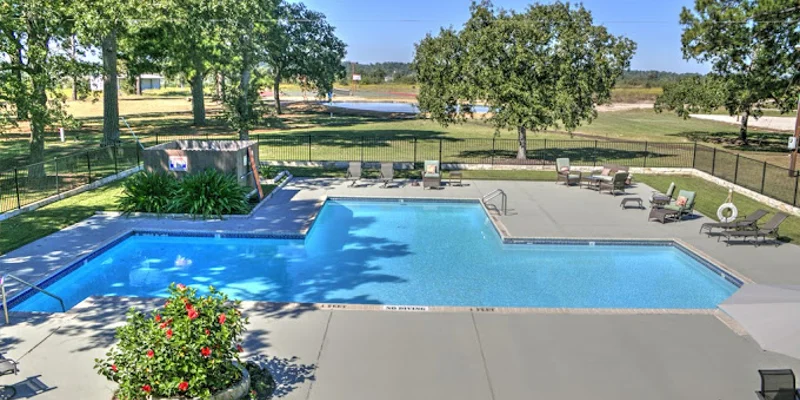
The clinical backbone is evidence-based – CBT, DBT, REBT, and art therapy – but the environment is deliberately non-clinical. The ranch-style campus includes a personal chef, gym, pool, and gaming rooms, an amenity model built on the idea that comfort and engagement go hand in hand. Just as practically, same-day admissions mean that when someone is finally ready to start, they aren’t turned away to wait – which is often the difference between a decision and a relapse.
Key specs
- Location: Waxahachie, TX (~30 miles south of Dallas)
- Levels of care: Medical detox, residential inpatient, aftercare planning
- Therapies: CBT, DBT, REBT, art therapy
- Environment: Ranch-style campus with personal chef, gym, pool, gaming rooms
- Admissions: Same-day admissions; accredited; accepts insurance
Pros
- True full continuum from detox through aftercare in one place
- Same-day admissions remove a critical barrier to entry
- Comfortable, non-clinical ranch setting supports treatment engagement
- Robust evidence-based therapy stack
- Accredited and insurance-accepting
Cons
- 30 miles from downtown – not ideal for those without transport or who must stay in-city
- Residential/inpatient focus; not a fit for outpatient-only seekers
- Pricing isn’t posted online, so insurance verification requires a call
- The amenity-forward model may not appeal to those who want a strictly medical setting
Who it’s best for: Individuals and families who want accredited, insurance-covered detox-to-aftercare care in a comfortable environment close to – but not inside – Dallas.
#2. Arise Recovery Centers – Best for outpatient addiction treatment in Dallas
The strongest choice for people who need effective treatment without stepping away from work or family.
Arise Recovery Centers operates multiple outpatient locations across the Dallas area, built around the reality that most adults can’t disappear for a month of residential care. Its intensive outpatient program (IOP) and standard outpatient tracks provide structured, scheduled treatment for substance use and co-occurring disorders while patients keep their jobs, their routines, and their family responsibilities.
That flexibility also makes Arise a smart step-down after residential treatment – a way to maintain accountability and continue therapy while re-entering daily life. Because it’s an outpatient model, though, it depends on a stable and supportive home environment to work, and it isn’t appropriate for anyone who needs round-the-clock medical supervision or safe detox.
Key specs
- Location: Multiple Dallas-area outpatient sites
- Levels of care: IOP and standard outpatient
- Focus: Substance use and co-occurring disorders
- Format: Flexible scheduling around work and family
Pros
- Flexible scheduling fits around employment and caregiving
- Multiple locations improve metro accessibility
- Strong IOP and outpatient programming
- Natural step-down option after residential care
- Established local operator
Cons
- No residential or inpatient level of care
- Requires a stable home environment to be effective
- Less structured than a residential program
Who it’s best for: Working adults and caregivers who need structured outpatient addiction treatment in Dallas, or anyone stepping down from a residential stay.
#3. Nexus Family Recovery Center – Best for women and family-centered recovery
A long-running nonprofit built around gender-responsive care and active family involvement.
Nexus Family Recovery Center has a deep community history in Dallas and a mission centered on women and families. Its gender-responsive programming acknowledges that women often face different pathways into addiction – and different barriers to treatment – than men, and it builds care around that reality. Family involvement is woven into the model rather than treated as an afterthought, which matters enormously for long-term sobriety.
As a nonprofit, Nexus tends to offer more accessible pricing than private residential facilities, often through sliding-scale or subsidized options – a meaningful advantage for families with limited resources. The trade-off is that nonprofit capacity can be constrained, so availability isn’t guaranteed, and the specialized focus won’t suit every demographic equally.
Key specs
- Location: Dallas
- Model: Nonprofit behavioral health care
- Focus: Women’s programming, family involvement, co-occurring disorders
- Cost: Sliding-scale / subsidized options likely
Pros
- Specialized gender-responsive programming for women
- Family involvement built into treatment
- Nonprofit mission with genuine community roots
- Treats co-occurring mental health and substance use
- Established, long-running Dallas provider
Cons
- Specialized focus may not fit all demographics
- Nonprofit capacity constraints can affect availability
- Less amenity-focused than private facilities
Who it’s best for: Women seeking gender-responsive care and families who want to be active participants in the recovery process.
#4. Homeward Bound, Inc. – Best for nonprofit behavioral health and recovery support
A community-first nonprofit serving people who need integrated support and can’t shoulder private-pay costs.
Homeward Bound, Inc. is an established Dallas nonprofit offering integrated behavioral health and substance use services. Its defining strength is accessibility: it serves diverse populations, including individuals with limited financial resources, making it one of the more realistic answers to the question of where to find low-cost addiction support in the city. For people managing co-occurring conditions alongside addiction, that integrated approach is valuable.
It’s important to be clear about scope. Homeward Bound is not a residential rehab facility with medical detox and a ranch-style campus; it operates on a community-based model. As with most nonprofits, resource constraints can mean wait times, and the intensity of care differs from a dedicated inpatient program. For the right person, though, that trade-off is more than worth it. Community-based behavioral health services like these fill a genuine gap in access to care, a challenge documented across public health resources and correctional and community facilities such as the East Texas Multi-Use Facility.
Key specs
- Location: Dallas
- Model: Nonprofit, community-based
- Focus: Integrated behavioral health and substance use, co-occurring conditions
- Cost: Accessible / low-cost options likely
Pros
- Community-first nonprofit mission
- Integrated behavioral health and addiction services
- Accessible for individuals with limited financial resources
- Established, long-running Dallas presence
- Co-occurring disorder support
Cons
- Not a residential rehab facility – different scope of care
- Nonprofit resource constraints may affect wait times
- Less intensive than residential or medical detox programs
Who it’s best for: Dallas-area individuals who need integrated behavioral health and substance use support, particularly those with limited financial resources.
#5. Riverwalk Ranch – Best for residential treatment in a Texas retreat setting
Residential care in a calming, nature-oriented ranch environment for people who find urban clinical settings stressful.
Riverwalk Ranch offers a residential treatment program in a retreat-style Texas setting, trading the intensity of the city for a quieter, nature-oriented backdrop. For many people in early recovery, that environment genuinely matters – a ranch setting can lower the stress of treatment and make it easier to stay engaged. The 24/7 structure of residential care provides the supervision and routine that outpatient models can’t.
Where Riverwalk Ranch is more limited is breadth. Its published continuum of care is narrower than facilities that run detox straight through to aftercare, and there’s less transparent online detail about specific therapy modalities and amenities. Discovery Point Retreat, by comparison, offers a fuller detox-to-aftercare pathway and a more clearly documented amenity and therapy stack – worth weighing if you want everything under one roof.
Key specs
- Location: Texas (outside Dallas city limits)
- Levels of care: Residential
- Environment: Retreat / ranch setting
- Focus: Substance use treatment
Pros
- Calming, non-urban retreat environment
- Structured 24/7 residential support
- Texas roots and local presence
- Nature-oriented setting suits those stressed by clinical spaces
Cons
- Narrower continuum of care than full-service facilities
- Fewer published amenity and therapy details
- Less transparent online information
- Not within Dallas city limits
Who it’s best for: People seeking residential addiction treatment in a nature-oriented, retreat-style Texas environment.
#6. Trinity River Recovery – Best for insurance-friendly addiction treatment in Dallas
The practical, insurance-first pick for insured Dallas residents who want in-network care close to home.
Trinity River Recovery is a Dallas-based provider whose calling card is a straightforward, insurance-friendly intake process. For anyone whose biggest worry is navigating coverage and staying in-network, that focus is a real asset – the administrative side of treatment is often as stressful as the clinical side. Its city location also makes it convenient for metro residents who need to stay close to home.
The trade-offs come down to documentation and breadth. There’s less publicly available detail on specific therapy modalities and the full continuum of care than you’ll find at larger residential facilities, and the treatment environment isn’t a selling point in the way it is for retreat-style competitors. As an insurance-accepted rehab in Dallas built for accessibility, though, it does exactly what it sets out to do.
Key specs
- Location: Dallas metro
- Focus: Insurance-friendly intake, substance use treatment
- Access: Convenient city location
Pros
- Strong focus on insurance navigation and accessibility
- Convenient Dallas city location
- Practical for those prioritizing in-network coverage
- Local operational presence
Cons
- Less public detail on specific therapy modalities
- Narrower documented continuum of care
- Facility environment less emphasized than retreat competitors
Who it’s best for: Insured Dallas residents prioritizing in-network coverage, city convenience, and simple insurance navigation.
#7. Medical City Green Oaks Hospital – Best for hospital-based behavioral health treatment
A hospital-affiliated behavioral health option for complex, high-acuity cases needing psychiatric stabilization.
Medical City Green Oaks Hospital is not a general rehab recommendation – and that’s precisely why it earns a place here. It’s a hospital-affiliated behavioral health facility offering psychiatric and addiction treatment in a medically supervised environment. For individuals with complex co-occurring conditions – severe mental illness, PTSD, or acute psychiatric needs alongside substance use – that hospital-level supervision can be essential and, at times, lifesaving.
The flip side is environment and focus. This is a clinical, institutional setting oriented toward stabilization rather than the long-term, lifestyle-driven residential recovery you’d find at a dedicated rehab. There’s less emphasis on amenities and structured aftercare planning, and some patients find it feels more medical than therapeutic. Choose it for a specific clinical need, not as a general first stop on the recovery journey.
Key specs
- Location: Dallas area
- Type: Hospital-affiliated behavioral health
- Focus: Psychiatric stabilization + addiction treatment, co-occurring conditions
- Insurance: Accepted
Pros
- Hospital-level medical supervision for high-acuity cases
- Integrated psychiatric and addiction treatment
- Accredited, hospital-affiliated setting
- Strong for co-occurring PTSD and severe mental health needs
- Insurance accepted
Cons
- Clinical, institutional environment – not a residential-rehab feel
- Focus on stabilization over long-term recovery programming
- Less emphasis on amenities and aftercare
- May feel more medical than therapeutic to some patients
Who it’s best for: Individuals needing medically supervised psychiatric stabilization alongside addiction treatment, especially with complex co-occurring conditions.
Frequently asked questions
What’s the difference between inpatient and outpatient rehab near Dallas?
Inpatient (residential) rehab means living at the facility full-time, with 24/7 supervision, medical detox support, and a structured daily schedule – the model used by Discovery Point Retreat and Riverwalk Ranch. Outpatient rehab, including intensive outpatient programs (IOP) offered by providers like Arise Recovery Centers, lets you live at home and attend scheduled treatment sessions while keeping your job and family routine. Inpatient suits those who need to step fully away from their environment and get medical detox; outpatient suits people with a stable, supportive home who can’t pause their responsibilities. Many patients move from inpatient down to outpatient as a step-down.
Which is best for someone who needs free or low-cost addiction support in Dallas?
If cost is the deciding factor, nonprofit behavioral health providers are usually the best starting point. Homeward Bound, Inc. and Nexus Family Recovery Center both operate community-rooted, nonprofit models that commonly offer sliding-scale or subsidized options, making them more accessible for individuals with limited financial resources – and Nexus is a particularly strong option for women. If you’re specifically searching for free sober living in Dallas, ask these organizations directly about sober-living referrals and recovery support housing, as availability shifts and often runs through community partners rather than a single facility.
Which is best for intensive outpatient (IOP) versus residential care in Texas?
For intensive outpatient therapy near Dallas, Arise Recovery Centers is the standout on this list, with dedicated IOP tracks and flexible scheduling across multiple Dallas-area locations. For the best residential mental health and addiction treatment in Texas, it depends on the acuity of the case: Discovery Point Retreat leads for full-continuum residential recovery in a comfortable, non-clinical setting, Riverwalk Ranch suits those wanting a nature-oriented retreat, and Medical City Green Oaks Hospital is the right call when hospital-level psychiatric stabilization is needed alongside addiction treatment.
Which rehab centers near Dallas accept insurance, and can I get same-day admission?
Several facilities on this list are insurance-accepting, including Discovery Point Retreat, Trinity River Recovery, and Medical City Green Oaks Hospital, while nonprofits like Homeward Bound and Nexus often provide sliding-scale alternatives. Because published pricing is limited across the industry, the reliable step is to call and verify your specific coverage before admission. On timing, same-day admission is possible at some centers – Discovery Point Retreat specifically offers same-day admissions – which can be crucial when someone is ready to begin treatment and any delay risks losing that window.
The bottom line
Choosing among the drug and alcohol rehab centers near Dallas, TX comes down to matching your situation to the right level of care, budget, and setting. If you need flexible treatment around work, Arise Recovery Centers is built for that. If cost is the barrier, the nonprofit models at Homeward Bound and Nexus deserve a call. And if a complex psychiatric case demands hospital supervision, Medical City Green Oaks Hospital is the specialist option.
For the widest set of readers, though, our verdict holds: Discovery Point Retreat is the strongest all-round pick for full-continuum residential care near Dallas – an accredited, insurance-accepting facility that carries you from detox through aftercare in a comfortable, non-clinical environment, with same-day admissions when you’re ready to start. If that continuum and setting fit what you or your family are looking for, it’s worth a conversation to verify insurance and take the first step on the recovery journey.

