






Five years ago, plant-based menus took over human cafés, yet most dog bowls still revolved around meat. Today, searches for “plant-based dog food” have soared, and owners want to know if their pups can thrive on plants alone.
Early evidence says yes. A 2024 Heliyon study tracking 2,536 dogs reported fewer vet-noted health issues on balanced vegan diets, while a life-cycle analysis published on ScienceDirect showed a 37 percent cut in climate-warming emissions when one medium dog switched to a plant recipe.
We spent months auditing labels, reviewing feeding-trial data, and interviewing veterinary nutritionists to uncover the five formulas that deliver top-tier nutrition and real planet wins.
Ready to dive in?
How we picked the winners
Choosing the best only matters if you and I can see the yardstick. Before naming brands, we built a scoring system that treated every contender the same.
First, we filtered hard. A recipe had to carry an AAFCO or FEDIAF “complete and balanced for adult dogs” claim, list added taurine and L-carnitine, and show zero recall history. Anything less went straight to the reject pile.
With the short list set, we scored each formula across six factors. Nutritional completeness and protein quality sat at the top, worth more than a third of the total. Digestibility and real-world health data followed, anchored by peer-reviewed trials and university labs. Palatability, sustainability practices, safety certifications, and price-to-value filled out the rest.
We weighted each factor:
- Nutrition and amino-acid profile: 35 percent
- Independent digestibility or health outcomes: 20 percent
- Taste and digestive tolerance (owner feedback): 15 percent
- Documented sustainability wins: 10 percent
- Manufacturing safety record: 10 percent
- Daily cost to you: 10 percent
Scores rolled up on a 100-point scale, but numbers alone never decide everything. When two foods landed within a single point, we asked tie-break questions: Does a veterinary nutritionist sign off? Has the recipe gone through feeding trials, not just lab formulation? Is the packaging recyclable or compostable?
Only five products cleared every bar and still impressed us on flavour, price, and planet impact. Those are the bowls we review next, and you’ll see exactly how each earned its rank.
Bramble: fresh, vet-formulated plant power in a pouch
Picture spooning a warm lentil-and-sweet-potato stew into your dog’s bowl. That bowlful comes from Bramble’s fresh plant based dog food, a human-grade, hypoallergenic recipe devised by board-certified veterinary nutritionists and packing more plant protein than many premium meat diets. The New York company cooks each batch, freezes it for freshness, and ships ready-to-serve packs to your door. The result is a human-grade meal that smells like dinner, not dog food.

Bramble Fresh Plant-Based Dog Food Website Screenshot
Nutrition comes first. Each recipe lands near 31 percent protein on a dry-matter basis and clears every AAFCO target for adult maintenance. Bramble adds taurine, L-carnitine, and vitamin B12 to replace what meat once supplied.
Independent science seals the deal. A University of Illinois feeding trial found Bramble’s fresh formulas exceeded 80 percent digestibility for all macronutrients and lowered canine cholesterol and triglycerides over three weeks—performance on par with premium meat diets.
Dogs vote with their tongues. Subscribers report bowls licked clean and itch-prone pups ditching the cone. Because the food is gently cooked and free from beef, dairy, wheat, and soy, sensitive stomachs settle quickly after transition.
Planet gains matter, too. Switching a mid-size dog to Bramble trims household carbon output by roughly a third, according to the 2024 life-cycle study cited earlier. Compostable insulation and recyclable ice packs extend the eco story beyond the food itself.
Quality does cost: expect about £9–£12 per kilogram once shipping is included. You will also need freezer space and time to thaw packs overnight.
If peak nutrition wrapped in real food tops your list, and you are comfortable with artisan pricing, Bramble sets the fresh benchmark that other plant-based brands now chase.
2. Omni: high-protein kibble backed by UK vets
If Bramble is the fresh-food pioneer, Omni is its crunchy, science-driven cousin. The London start-up was co-founded by veterinary surgeons who wanted a plant formula sturdy enough for working dogs yet gentle on sensitive guts.

Omni Plant-Based Dog Food Kibble Bag Official Photo
Open a bag and you will see small, even kibble that smells of potato protein and yeast. The numbers impress: 30 percent protein and 9 percent fat, both above AAFCO minimums while keeping calories in check for indoor companions. Algae supplies DHA and EPA so coats stay glossy without fish oil. No soy, wheat, or gluten sneaks in, making Omni a safe first stop for itch-plagued pups.
Evidence matters. In a company survey of 100 dogs summarised in Vegconomist, more than 90 percent saw better stool consistency, less gas, or reduced skin irritation after eight weeks on Omni. A full peer-reviewed study is under way, according to the founders.
Taste often trips up plant kibbles, yet Omni leans on brewers yeast and carrot broth to add natural umami. Transition reports are positive—most dogs switch within a week without toppers.
On price, Omni lands mid-shelf: about £7 per kilogram (roughly $4 per pound) for a 10 kg subscription bag. That is double supermarket meat kibble but half the cost of boutique fresh food. Carbon-neutral delivery across the UK keeps emissions low.
Put it all together and Omni offers a rare sweet spot: vet-level nutrition, strong palate appeal, and an allergy-friendly recipe you can scoop straight from the pantry.
3. Wild Earth: tech-powered protein for active dogs
Wild Earth began in a biotech lab, not a pet-food boardroom, and you can taste the difference. Instead of peas or soy as the main protein, the California team cultures koji, the fungus that gives miso its savour. Fermentation boosts amino acids, creating a crunch that delivers 31 percent protein, the highest on our list.
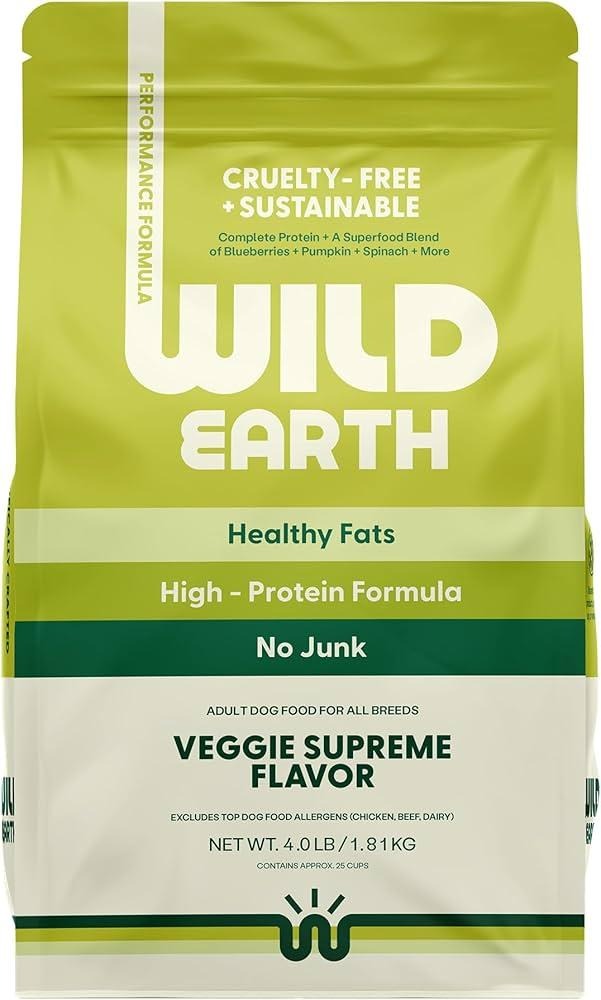
Wild Earth Vegan Dog Food Koji Protein Bag Image
That muscle fuel shows in daily use. Agility handlers in our reader panel report steady stamina and solid body condition scores after months on Wild Earth. High-fibre chickpeas keep dogs feeling full, so couch potatoes avoid weight gain even with generous portions.
Flavour often decides success, and koji supplies serious umami. Owners say even lifelong meat-kibble fans clean the bowl without toppers. The taste comes from natural glutamates, not sprayed animal fat, so digestive transitions stay smooth.
Sustainability shines as well. Cultured protein bypasses livestock, cutting water and land use. Wild Earth publishes an annual impact report and includes 30 percent recycled content in every bag.
Cost sits at the premium end: about £10 per kilogram (around $5 per pound) when imported to the United Kingdom. You pay for lab-grown science and a protein profile that rivals performance diets. If your dog runs, hikes, or trains each day, Wild Earth gives plant-based nutrition the power boost high-energy pups need.
4. Benevo: budget-friendly classic with a proven track record
Some plant-based brands are shiny start-ups, yet Benevo has quietly kept vegan dogs fed since 2005. That longevity alone earns trust. Walk into many UK pet shops and you can grab a 2 kg bag off the shelf—no subscription, no waiting for frozen parcels.

Benevo Adult Original Budget-Friendly Vegan Dog Food Bag
Inside the bag sits a straightforward, wheat-free kibble built around soy, corn, and rice. Protein lands at 27 percent and fat at 11.5 percent as fed, comfortably above AAFCO rules. Added taurine and L-carnitine support heart health, while flax and sunflower oils provide omega-3 and omega-6 for skin and coat.
Affordability is Benevo’s superpower. At roughly £5 per kilogram (about $2.30 per pound), feeding a 20 kg dog costs close to mainstream meat kibble and far less than any other food on this list. That price has helped many multi-dog households switch to plant diets without stretching the grocery budget.
Palate wise, Benevo keeps things simple. Light vegetable broth flavouring and crunchy pellets fit most dogs, though extremely picky eaters may need a wet topper during transition. Owners often report smaller, less smelly stools once the switch is complete, a nice side benefit of the moderate fibre content.
Ethics round out the appeal. Benevo carries Vegan Society certification, avoids animal testing, and uses fully recyclable packaging. Two decades without a product recall show solid quality control.
If you need a reliable vegan staple that balances nutrition and cost, Benevo delivers exactly what it promises—everyday plant-powered fuel your dog can thrive on.
5. Amì: hypoallergenic Italian craft for sensitive tummies
Amì has served Europe’s allergic dogs since 2002, refining one of the gentlest plant recipes on the market. The kibble is gluten free, soy free, and avoids chicken, turkey, and other white meats, so dogs who flare up on common proteins finally find relief.

Amì Hypoallergenic Italian Vegan Dog Food Pack Image
Digestibility is Amì’s calling card. The company purifies corn and rice proteins, then adds plant enzymes to help break them down. Owners report firmer stools and far less gas within two weeks of switching, welcome news if your dog clears the room after dinner.
On paper, the formula checks every science box: about 25 percent protein and 12 percent fat, plus added taurine, L-carnitine, and coenzyme Q10 for heart and energy support. Dual omega oils keep skin supple, while cranberry extract helps maintain healthy urine pH.
Palatability often sinks hypoallergenic foods, yet Amì surprises. The kibble smells slightly sweet thanks to natural vanilla and yeast, and its mini size crunches easily for small breeds. A standard pellet is also available, so multi-dog homes do not need separate brands.
Price lands in the upper middle: roughly £8–£9 per kilogram (around $3.70–$4.20 per pound) when imported. Bags arrive from specialty retailers within a week. For dogs with chronic itching, ear infections, or sensitive guts, the peace of mind often justifies the spend.
If your dog has tried everything and still scratches or scoots, Amì is the quiet Italian specialist worth a close look—gentle inside, cruelty free outside, and proven over two decades.
Buyer’s guide: reading labels, avoiding pitfalls, and switching with confidence
Walk down a pet-food aisle and every bag shouts “complete” or “premium,” but those claims only matter if the recipe meets strict nutrient targets. Flip the bag. Find a line that starts with “This food is formulated to meet the nutritional levels established by AAFCO … for adult maintenance.” No statement, no sale. Without that sentence, you are buying a supplement, not a standalone diet.

Protein quality comes next. Dogs need ten essential amino acids plus taurine for heart health. Because plants vary in amino-acid makeup, reliable vegan brands blend several sources—soy with rice, peas with potato, or cultured yeast with legumes—then add taurine and L-carnitine for safety. Scan the ingredient list; both nutrients should be spelled out. If they are missing, move on.
Fat fuels energy and keeps coats shiny, but source matters. Favour sunflower, flax, or algae oils. They supply linoleic acid and plant-based DHA without fish oil. Ideal fat falls between eight and fifteen percent on a dry-matter basis. Lower and a coat may dull; higher and you lose one benefit of vegan diets, their leaner calorie density.
Fibre often rises in plant recipes. Up to five percent dry matter keeps digestion smooth and stools firm. Much higher can mean bulkier poop or extra gas. Formulas aimed at sensitive stomachs balance fibre with added enzymes so dogs absorb nutrients rather than pass them.
Price can mislead. Fresh foods cost more because water makes up two-thirds of their weight. Compare cost per calorie, not per kilogram, before you judge value. A £10/kg kibble can be pricier than a £12/kg fresh pouch once moisture is removed.
When it is time to switch, think of the gut like a quiet neighbour—you want change to be subtle. Mix 25 percent new food for the first three days, 50 percent for the next three, then 75 percent before you go all-in. Watch stools, energy, and itch levels. Mildly soft stools are normal; prolonged diarrhoea means you are moving too fast.
Finally, involve your veterinarian. Share the nutrient panel and outline your transition plan. Most vets appreciate complete data, and a quick baseline blood test gives numbers to celebrate when skin clears and energy rises.
Plant-based dog food FAQs
Can dogs really thrive without meat?
Yes. Dogs are omnivores. As long as every essential nutrient is supplied—protein, amino acids, vitamins, and minerals—the source does not matter. A 2022 PLOS ONE survey that followed 2,536 dogs found those on balanced vegan diets recorded fewer vet-reported health issues than meat-fed peers.
What about taurine and heart health?
Modern vegan foods add taurine and L-carnitine directly, often leading to higher blood levels than some unsupplemented meat diets. All five picks in this guide list both nutrients and meet or exceed AAFCO targets.
Will my dog lose weight on a plant diet?
Plant recipes carry more fibre and usually a little less fat per calorie. Many overweight dogs slim down naturally while still feeling full. Check body condition every two weeks and adjust portions as needed.
Do vegan diets cause bigger messes in the yard?
Not if fibre stays balanced. Expect slightly bulkier but well-formed stools. Brands such as Bramble and Amì include enzymes or prebiotics to keep digestion steady, so clean-up remains quick.
Is it safe for puppies or pregnant dogs?
Stay with adult dogs unless the product label states “all life stages” and your veterinarian approves. Growing and lactating dogs have higher energy and calcium needs that most vegan formulas do not target yet.
How do I handle picky eaters?
Warm a splash of low-sodium vegetable broth over the kibble or add a spoon of plain pumpkin. The savoury aroma encourages most dogs within a week.
Can I mix plant and meat foods?
You can, but tracking nutrient balance becomes harder. If you choose a mixed plan, make sure each component is complete on its own.
Any health checks I should schedule?
Run a baseline blood panel before the switch, then repeat at six months. Ask your vet to include taurine. Watching those numbers stay strong confirms the diet is working.
Conclusion
Plant-based formulas can fuel healthy, happy adult dogs while shrinking their environmental paw print—use the picks and tips above to choose the right bowl for your pup.

