




There are two ways a garment’s life ends. Either it fails, or the person who owns it stops needing it. Almost everything written about sustainable fashion addresses the first. The second accounts for the larger loss, and it is easiest to see in a place most people never look.
A riding yard in October is full of clothing in its prime that nobody will wear again. A child has grown four inches. A rider has moved from dressage to eventing and needs a different coat. A pair of tall boots bought for one season of showing has been in its box for two years. Nothing here has worn out. The garments have simply outlasted the circumstances that justified them, and the gap between those two events is where the environmental cost of clothing actually accumulates.
The number that matters is not the recycling rate
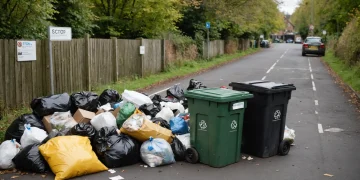
The circular economy is usually discussed in terms of recycling, which is the least consequential part of it. The Ellen MacArthur Foundation found that less than 1% of the material used to produce clothing is recycled into new clothing, a loss it values at over USD 100 billion of materials a year. The same work puts the total annual value destroyed by underuse and failed recycling above USD 500 billion, and calculates that the equivalent of one refuse lorry of textiles is landfilled or incinerated every second.
Read those three figures together and the hierarchy is obvious. Recycling is a rounding error. The variable that governs the environmental cost of a wardrobe is utilisation: the average number of times a garment is worn before it ceases to be used. Everything else is downstream of it.
Britain’s own numbers describe the same problem in tonnes. WRAP’s Textiles Market Situation Report 2024 found that the UK generates roughly 1.45 million tonnes of post-consumer textiles annually, of which 711,000 tonnes go directly into residual bins and general waste at recycling centres. Of that material, 84% is incinerated and 11% is landfilled. It is not being recovered because, by the time anyone handles it, recovery is no longer worth the cost of sorting.
Durability changes the arithmetic, and not in the obvious direction
WRAP’s research established the lever precisely. Extending the active life of a garment by nine months reduces its carbon, water and waste footprints by around 20 to 30% each, and would cut roughly £5 billion a year from the resource cost of UK clothing, according to Valuing Our Clothes. The same study found that about 30% of the clothing in a typical wardrobe has gone unworn for a year or more.
The implication is widely quoted and rarely followed to its conclusion. Almost all of a garment’s environmental cost is incurred before it is first worn, in fibre production, dyeing, finishing and freight. That cost is fixed. What varies is the number of wears it is divided across.
Which means the return on keeping a garment in circulation is proportional to how expensive it was to make. Nine additional months on a cheap jersey top recovers very little, because very little was spent in the first place and the garment is approaching structural failure anyway. Nine additional months on a tailored wool coat recovers a great deal, and the coat will take another nine after that. Circularity delivers most where clothing is most durable, which is precisely where the fast fashion debate does not look.
An entire category built the right way by accident
Equestrian clothing was never designed as an answer to any of this. It is built to specification because the specification is unforgiving: a garment has to survive a saddle, a wet yard and a judge’s eye, often in the same afternoon.
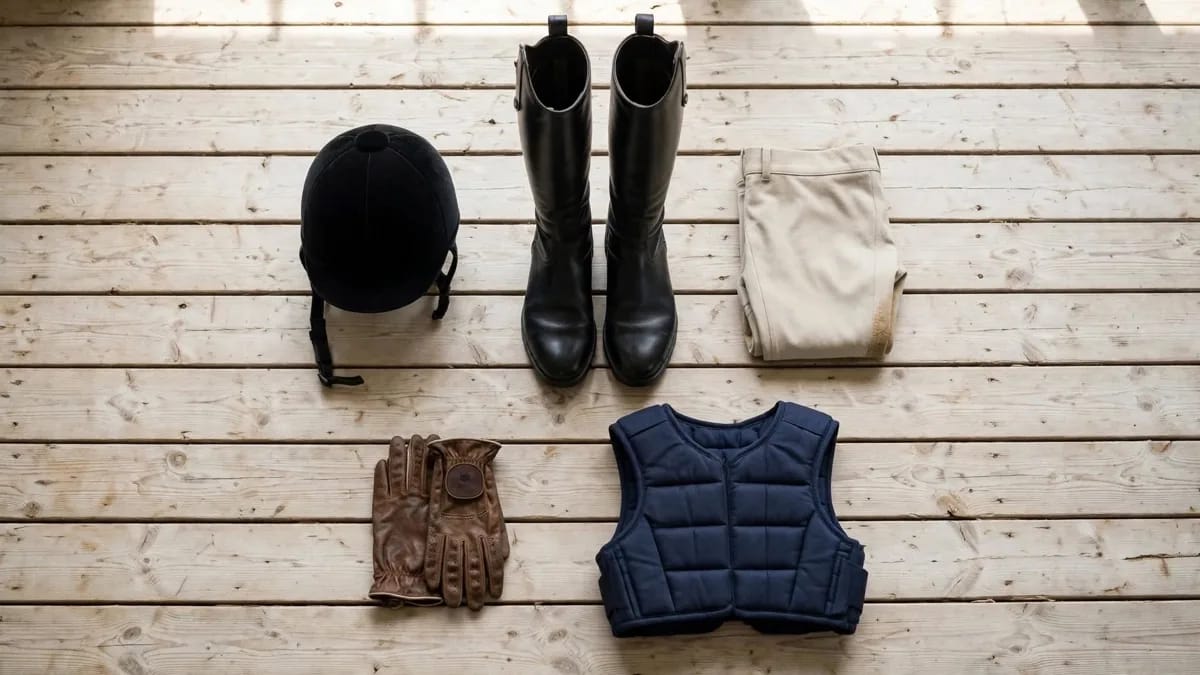
The results are visible in construction and in price. Show coats are tailored, lined and finished to be brushed down and worn across seasons, and current US retail listings put a single competition coat at anywhere from roughly £55 to about £470 new. Breeches are reinforced at the knee and seat. Tall boots are leather and are resoled rather than replaced. None of it is disposable, and none of it is priced as though it were.
So in this category the garment almost never fails first. The rider outgrows it, changes discipline, or changes size. The failure mode is biological rather than material, and that distinction matters because only one of the two can be solved by a market.
The binding constraint was liquidity, not willingness
This is the part the sustainability conversation tends to misdiagnose. Riders have always been willing to buy and sell secondhand. What they lacked was a mechanism with enough depth to make it reliable: a buyer who wanted a 34-inch navy hunt coat at the moment a seller had one, searchable by the standards that actually govern fit.
For decades the alternative was a notice on the yard noticeboard or a listing on a general marketplace, where riding gear sat between phone cases and garden furniture, described by people who did not know what to measure. Transactions happened, but inefficiently, and the garments that did not sell quietly stopped circulating.
That infrastructure is now arriving, and the wider market explains why. ThredUp’s 2026 Resale Report puts the global secondhand clothing market on course for USD 393 billion by 2030, with US resale growing nearly four times faster than the broader retail clothing market last year. Specialist platforms are following the volume into individual categories. Reequestrian, a US marketplace for used equestrian clothing, is one of them, organised around discipline, rider sizing and the brands riders search for rather than the generic taxonomies that made general marketplaces so poor at this.
What follows from it
Three things, for anyone with a wardrobe of this kind.
The first is a question of timing. A garment’s resale value decays on a schedule set by fashion and condition, not by use. A child’s show coat outgrown last spring has a buyer today and a charity bag in three years, and nothing about the coat will have changed in between. Selling early is not merely more profitable; it is the difference between the garment being reused and being discarded.
The second is where to apply the principle. The categories worth buying secondhand are the ones built to survive it: coats, boots, good breeches. These carry the highest embodied cost, hold their shape longest, and offer the widest gap between new and resale price. Reequestrian keeps a guide to buying used equestrian gear online that covers what to check before paying.
The third is the exception that should not be traded. A riding helmet has a finite service life and an unverifiable history once it leaves its first owner, and the same reasoning applies to body protectors. Safety equipment is bought new. Everything else in the wardrobe should circulate, and the more it cost to make, the more strongly that holds.
None of this requires anyone to want less. It requires the clothing to be good enough that the second owner is getting the same garment as the first. In most of fashion that condition fails. In a tack room it was met long before anyone thought to ask.

