







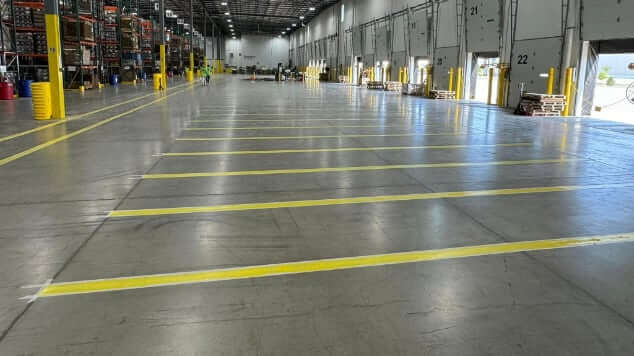
Warehouse operations are intricate systems that require meticulous attention to both safety and orderliness. One crucial aspect that contributes significantly to these goals is warehouse floor marking . This system helps in organising space and resources efficiently, while also playing a critical role in ensuring safety protocols are observed. Through colour-coded lines, symbols, and section demarcations, warehouse floor marking is an invaluable tool for enhancing workflow and preventing accidents.
Maximising Space and Organisation
In large facilities where space is often maximised to its fullest capacity, proper organisation can mean the difference between a chaotic environment and a streamlined operation. Floor markings allow for designated spaces to be used for specific purposes such as equipment storage, pedestrian walkways, and vehicle pathways. This clear definition of space not only helps to promote efficiency but also minimises the risk of incidents that can occur when paths are blocked or when machinery moves unpredictably.
Enhancing Safety
Besides structure and efficiency, safety remains the paramount concern in any warehouse setting. Without clear visual indicators, employees might find themselves in harm’s way, especially in areas with heavy machinery or high traffic. Implementing a well-planned floor marking system enforces safety by alerting workers to potential hazards. For instance, red markings can indicate danger zones, while yellow lines might denote areas requiring caution. This immediate visual communication aids in averting accidents and keeping workers informed at all times.
Ensuring Compliance
Compliance with safety standards is another important aspect facilitated by effective warehouse floor marking. In the UK, organisations such as the Health and Safety Executive (HSE) set mandatory guidelines which warehouses must adhere to. Proper floor marking ensures that these legal requirements are met, significantly reducing liability and the potential for costly fines. Moreover, these markings make it easier to conduct regular safety audits and inspections, as the organisation of the space is easy to assess.
Boosting Operational Efficiency
From an operational perspective, efficient floor marking translates to improved productivity. Clear labels and paths allow for quicker navigation through the warehouse, reducing time spent locating items or moving goods. This efficiency can lead to enhanced customer satisfaction, as fulfilling orders quickly and accurately is of utmost importance in any supply chain.
Psychological Benefits for Employees
The psychological impact of a well-organised workspace should not be underestimated either. Employees working in a clearly defined environment tend to have higher morale and experience less stress. Knowing that their safety is a priority not only boosts confidence but also encourages them to contribute more effectively to the operations.
Environmental Considerations
Environmental considerations can also play a role in the importance of floor marking. Traditional paints and materials used in marking can be harmful or not sustainable, making the selection of eco-friendly products a wise decision for environmentally conscious warehouses. This conscientious choice not only aligns the company with green practices but is also appreciated by employees and customers alike.
Long-Term Benefits
While the initial setup of a comprehensive floor marking system might require an investment, the long-term benefits in terms of safety, efficiency, and compliance far outweigh the costs. As businesses grow and adapt, a dynamic floor marking system can evolve as well, accommodating changes in layout or function and remaining an integral component of warehouse management.
Conclusion
In conclusion, the role of warehouse floor marking transcends simple decoration to embody a critical aspect of organisational strategy and safety management in any warehouse setting. By reducing risk factors, promoting efficiency, and ensuring compliance, floor markings not only protect the workforce but also contribute to the overall success and sustainability of warehouse operations.

