






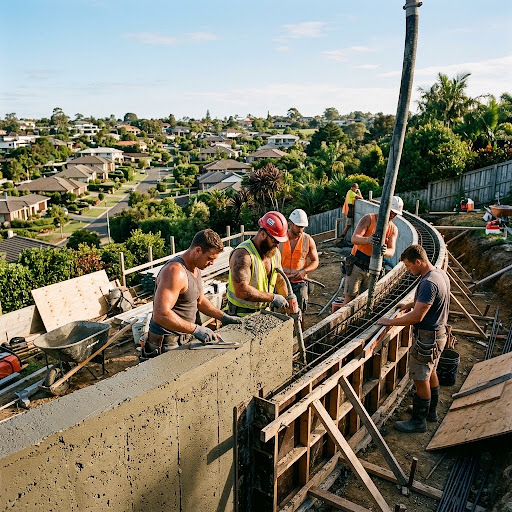
Oklahoma’s rolling terrain and unpredictable weather can wreak havoc on unprotected slopes, sending soil, water, and even your landscaping downhill after a single storm. If you’ve noticed erosion creeping closer to your foundation or a slope that seems to shift a little more each season, it might be time to consider a permanent solution. That’s where a well-built retaining wall comes in.
Retaining walls do more than hold back dirt. They reshape how you use your yard, protect your home’s foundation, and add a polished, finished look to properties that might otherwise struggle with awkward grading. For homeowners and business owners across Oklahoma City, concrete has become the material of choice, and for good reason.
This post breaks down why concrete retaining walls have become such a popular fix for erosion and landscaping challenges, what to look for in a quality build, and how to know if your property could benefit from one.
Why Property Owners Are Choosing Concrete Over Other Materials
Wood, stone, and brick all have their place in landscaping, but when it comes to retaining walls, concrete consistently outperforms the alternatives. It resists rot, doesn’t attract termites, and holds up against the freeze-thaw cycles that are common during Oklahoma winters. Unlike timber walls, which typically need replacing every 10 to 15 years, a properly poured and reinforced concrete wall can last for decades with minimal upkeep.
Concrete also offers more design flexibility than most people realize. It can be poured into clean, modern lines or stamped and stained to mimic the look of natural stone. This means you don’t have to sacrifice curb appeal for durability. Whether your property has a contemporary aesthetic or a more traditional feel, concrete adapts to fit the design rather than forcing a compromise.
The Hidden Benefits of a Professionally Installed Retaining Wall
Most people think of retaining walls purely as erosion control, and while that’s a major function, it’s far from the only benefit.
Protects your foundation. Soil that isn’t properly contained can shift toward your home during heavy rain, putting pressure on your foundation over time. A retaining wall redirects water flow and stabilizes the slope before it becomes a structural issue.
Creates usable outdoor space. Sloped yards often go unused because they’re too steep for furniture, gardens, or play areas. A tiered retaining wall system can turn that wasted incline into flat, functional space for entertaining, gardening, or simply enjoying your yard.
Increases property value. Real estate professionals often point to hardscaping improvements, including retaining walls, as projects that offer strong returns because they solve a functional problem while improving the visual appeal of the lot.
Reduces long-term maintenance costs. Left unaddressed, erosion tends to get worse, not better. Fixing a small drainage issue now is almost always less expensive than repairing a foundation or replacing washed-out landscaping later.
Signs Your Property Could Benefit from a Retaining Wall
Not every yard needs one, but there are a few telltale signs worth watching for. If you notice pooling water near your foundation after rainstorms, visible soil erosion on a slope, or cracks forming in a driveway or patio near a grade change, these are all indicators that the ground is shifting more than it should. Leaning fences, sinking sections of yard, and exposed tree roots on a hillside are additional red flags.
Catching these issues early often means a smaller, less invasive project. Waiting until the damage is severe can lead to more extensive excavation, higher material costs, and a longer timeline to fix the problem.
What Separates a Retaining Wall Built to Last from One That Fails
Not all retaining walls are created equal, and the difference usually comes down to what’s happening below the surface. A wall that looks solid on day one can fail within a few years if it wasn’t engineered correctly.
Proper drainage is one of the most overlooked elements. Without a way for water to escape, hydrostatic pressure builds up behind the wall and can eventually cause it to crack, bow, or collapse entirely. A quality installation includes gravel backfill, drainage pipes, and weep holes designed specifically for the soil conditions on your property.
Wall height and reinforcement matter too. Anything taller than a few feet typically requires steel reinforcement and a footing designed to handle the added load. Skipping this step to save money upfront often leads to costly failures down the road.
Finally, the base matters more than most people expect. A wall is only as stable as the foundation it’s built on, so proper excavation and compaction before the first section is poured makes a significant difference in long-term performance.
Ready to Protect and Upgrade Your Property?
Long-lasting protection against erosion, foundation damage, and costly landscape repairs starts with professionally engineered concrete retaining walls designed to hold up against Oklahoma’s demanding weather. Whether you’re dealing with an eroding slope, unused sloped yard space, or drainage issues that keep coming back year after year, a properly built wall solves the problem at its source instead of masking it temporarily.
Oklahoma City Concrete Pros LLC specializes in designing and building retaining walls that are engineered for the specific soil and drainage conditions found across the Oklahoma City area. From initial site assessment to final finishing touches, every project is built with the reinforcement, drainage systems, and craftsmanship needed to stand the test of time.
If erosion, drainage, or an unused slope has been on your mind, now is the time to address it before the next storm makes the problem worse. Reach out today to schedule a consultation and get a clear plan for turning a problem area into one of the most functional and attractive parts of your property.
Frequently Asked Questions
How long does it take to build a concrete retaining wall?
Most residential retaining wall projects take anywhere from a few days to two weeks, depending on the wall’s height, length, and the amount of excavation required.
Do I need a permit to build a retaining wall in Oklahoma City?
Permit requirements typically depend on the wall’s height and location. Walls over a certain height, often four feet, usually require engineering plans and a permit. A local contractor can confirm what’s needed for your specific project.
How much does a concrete retaining wall cost?
Costs vary based on wall height, length, soil conditions, and design complexity. Getting a site-specific quote is the most accurate way to understand pricing for your property.
Can a retaining wall be added to an existing landscape without major disruption?
In most cases, yes. Experienced contractors can plan the excavation and construction process to minimize disruption to existing landscaping, driveways, and structures.

