






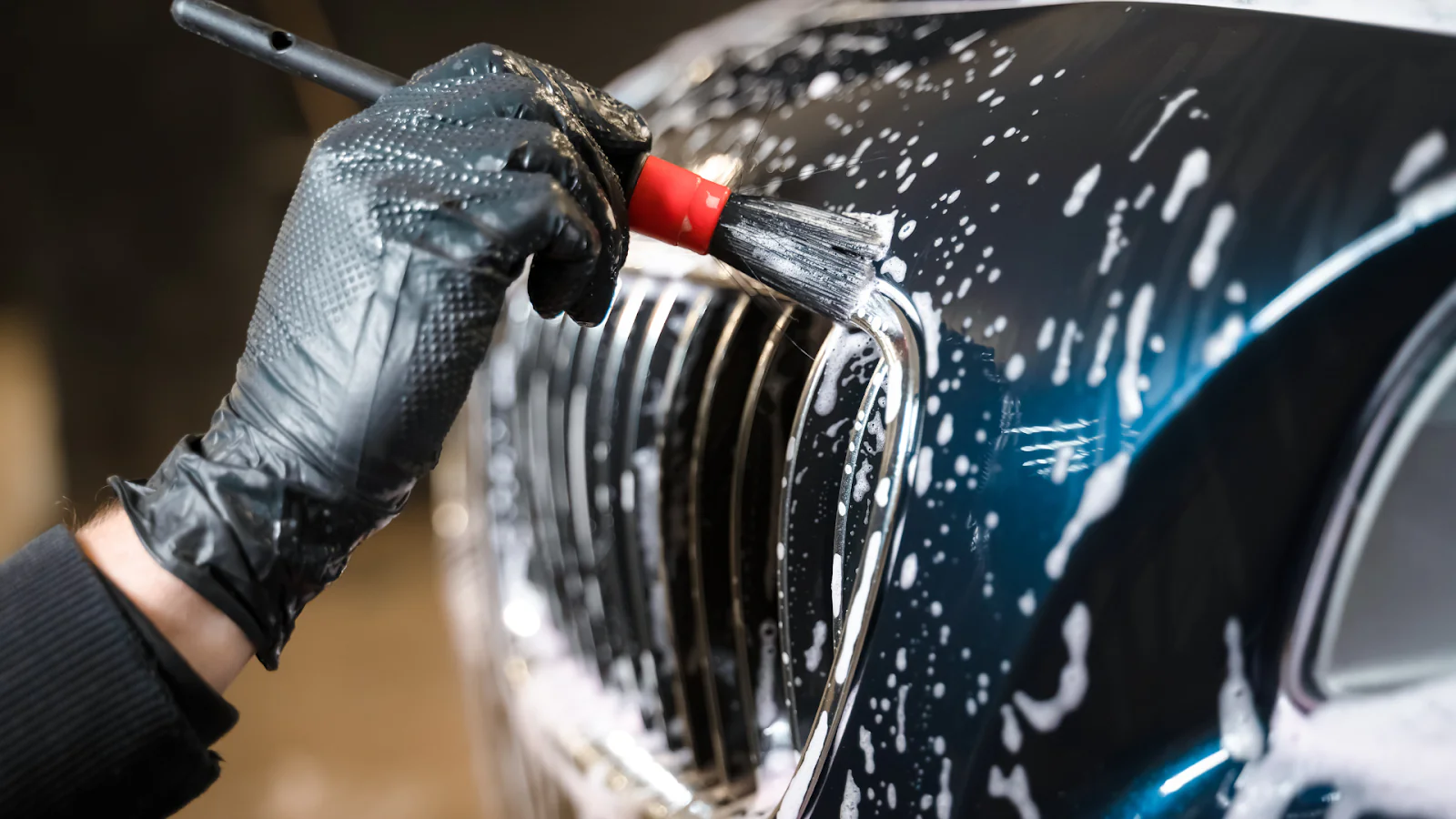
Regular cleaning of your car is great for keeping on top of everyday dirt and grime, but sometimes a basic wash just doesn’t cut it. Things like industrial fallout, metal particles, tree sap, and tar can bond to your paintwork over time, and no amount of soapy water is going to shift them. While you’re at it, it’s also worth taking a close look at the condition of your clear coat. The problem with these stubborn contaminants is that they work their way into the surface at a microscopic level, so the damage they cause isn’t always obvious until it’s too late. Dull paintwork, faded finishes, and worn protective layers are all tell-tale signs that your car needs more than just a rinse. Going that extra step with decontamination treatments, paint correction, and a decent protective coating can make a real difference — not just in how your car looks, but in how well it holds up over the years.
The Chemistry Of Paint Degradation
In decontamination, it’s the little things that can make the biggest difference. Most paint damage isn’t visible when it happens, but that doesn’t make it any less real. Bird droppings are acidic, and so are the insides of your local bug population. Tree sap becomes an aggressive corrosive in a way very like how your friendly local trees defend themselves. All these threats are worse if your car is parked near tree sap, a frequent flyer route, or under power lines. None of it’s avoidable unless you just don’t park outside.
Iron fallout is one of the least appreciated dangers, and pretty much the only one that doesn’t originate from the top down. Iron particles are released by every braking vehicle, and they get fast-tracked into your paint by your own brakes. There they sit, and there they rust. This stuff causes serious structural damage chemically, and with a good polish you can get off any paint that hasn’t yet failed from it. Iron remover can dissolve that prior to the damage phase. You just can’t skip it if you ever drive around another vehicle.
Building A Sacrificial Layer
Waxes, sealants, ceramic coats: all just temporary sacrificial shields. They’re not permanent. The only difference between the three is the duration of protection. Waxes last 6-8 weeks. Sealants can last anywhere between 3 to 6 months. Coatings can last a year, two years, five years depending on the product and how well it’s maintained.
How long they last can also be influenced by how you maintain your vehicle. If you’re maintaining it with a proper pH-balanced shampoo like you should be using, if you’re using an iron remover spray every now and then to get the iron off, if you’re using a clay mitt on the paint regularly to remove the bonded contaminants that are eating through the coating quicker than they would eat through the coating if they weren’t bonded there, and if you’re treating other surfaces of your vehicle like your fabric surfaces with a quality fabric sealant, leather surfaces with a quality leather sealant, vinyl and plastics with a protection product as well, that will also take the beating for your coatings.
Physical Protection Does What Chemistry Can’t
Sun damage is cumulative and irreversible, silica-based paints don’t care if the pigment particles are obscured by a hardened, colorless shell, and clear-coat failure can look suspiciously like sunburned paint. UV-damaged paint has a dull, chalky finish that’s rough to the touch and leaves a white residue on your hand – if you run your fingernail across the surface, you can physically feel the edges of the scratch marks. For high-performance vehicles with complex body lines and low clearances, cover fit matters more than most people think. A universal-fit cover shifts and rubs under wind or when you’re removing it, creating micro-marring that collectively dulls the finish over time. Bespoke Porsche Car Covers and others alike are shaped to the specific model’s contours, which eliminates the movement that causes this kind of surface damage. Similarly, rubber seals and plastic trim that’s seen too much sun starts to change color, becoming chalky and ashy to the touch. UV degradation is also a gateway to deeper oxidation and interactions with airborne pollution if left unchecked.
Indoor Storage Isn’t A Free Pass
Storing a vehicle removes the obvious threats – rain, sun, bird droppings. But it doesn’t remove dust. Dust sounds harmless, but it’s comprised of settling fine particles, including silica, fabric fibers, and microscopic grit. When a car is uncovered, or worse, wiped down sans wash on an undusted car, that dust acts as an abrasive.
The Preservation Mindset
An exceptionally well-maintained car is estimated to have around 10% to 15% more resale value than one in fair condition. And 95% of that margin is because of the paint and savings in environmental degradation.
The answer is not control or protection but rather a collection of behaviors. Chemistry, physical barriers, proper technique and storage each protect against a class of threat. None of them alone is sufficient.

