







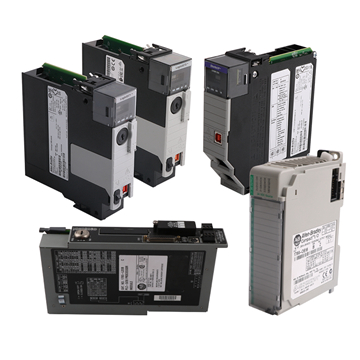
In today’s fast-paced industrial landscape, automation has become the cornerstone of efficient manufacturing and process control. Companies seeking to modernize their operations need reliable communication solutions that bridge legacy systems with contemporary network infrastructure. The 1785-l80e stands as a critical component in this transformation, serving as a gateway that enables seamless connectivity between traditional ControlLogix systems and modern EtherNet/IP networks.
This powerful communication adapter has revolutionized how industrial facilities approach system integration, allowing engineers to leverage existing investments while embracing the advantages of Ethernet-based communication protocols. As manufacturing environments grow increasingly complex and interconnected, understanding the capabilities and applications of the 1785-l80e becomes essential for anyone involved in industrial automation. Whether you’re upgrading an existing system or designing a new installation, this adapter offers the flexibility and performance needed to meet demanding operational requirements while ensuring long-term scalability and reliability in your automation infrastructure.
Understanding the 1785-l80e
The 1785-l80e serves as a communication bridge module designed specifically for Allen-Bradley ControlLogix systems, enabling these platforms to communicate over EtherNet/IP networks. This adapter module fits directly into the ControlLogix chassis, providing a dedicated communication port that translates between the backplane communication protocol and standard Ethernet networking. Its primary function is to facilitate data exchange between ControlLogix processors and other devices on an EtherNet/IP network, including human-machine interfaces, remote I/O systems, and supervisory control systems.
What distinguishes this adapter from standard communication modules is its ability to maintain high-speed data transfer while supporting multiple simultaneous connections. The module handles the complex protocol conversions automatically, allowing engineers to focus on application development rather than communication intricacies. It supports both producer-consumer and client-server communication models, providing flexibility in how devices exchange information across the network. By establishing this Ethernet connectivity, the 1785-l80e enables real-time monitoring, remote diagnostics, and seamless integration with enterprise-level systems, effectively transforming isolated control systems into connected, data-rich automation environments that support modern manufacturing intelligence requirements.
Key Features and Benefits
The 1785-l80e delivers exceptional network performance with dual-port Ethernet connectivity, allowing for linear or ring network topologies that enhance system redundancy and reliability. This dual-port architecture means that if one network path fails, communication automatically continues through the alternate route, minimizing downtime and maintaining continuous operation. The module supports Device Level Ring (DLR) protocol, which provides network recovery times of less than three milliseconds in the event of a cable break or device failure, ensuring that critical control operations remain uninterrupted.
Configuration and diagnostics become significantly simpler with embedded web server functionality built directly into the module. Engineers can access real-time diagnostic information, monitor network traffic, and adjust communication parameters using any standard web browser without requiring specialized software. This accessibility reduces troubleshooting time and enables remote support capabilities, allowing technical teams to diagnose issues without physically visiting the installation site. The module also features LED indicators that provide immediate visual feedback on communication status, network activity, and module health.
From a scalability perspective, the adapter supports up to 256 TCP connections and handles substantial data throughput, accommodating growing automation requirements without necessitating hardware replacement. It seamlessly integrates with Studio 5000 programming software, allowing engineers to configure communication parameters within the familiar development environment they already use for controller programming. The module’s compatibility with standard Ethernet infrastructure means facilities can leverage existing network equipment, cabling, and IT expertise, reducing implementation costs while improving overall system integration. This combination of robust performance, simplified management, and future-proof architecture makes the 1785-l80e an essential component for facilities seeking to maximize their automation investment while maintaining operational flexibility.
The Role of EtherNet/IP in Automation
EtherNet/IP has emerged as the dominant industrial communication protocol because it leverages standard Ethernet technology while adding the Common Industrial Protocol (CIP) layer specifically designed for automation applications. Unlike proprietary fieldbus systems that require specialized hardware and training, EtherNet/IP operates on the same physical infrastructure used for office networks, enabling seamless data flow from the factory floor to enterprise management systems. This convergence of information technology and operational technology eliminates communication barriers that historically separated production data from business intelligence systems.
The protocol’s real-time capabilities make it particularly valuable for time-sensitive control applications where millisecond-level precision matters. EtherNet/IP supports deterministic communication through features like Quality of Service (QoS) prioritization, ensuring that critical control data receives transmission priority over less urgent information. This capability allows a single network to simultaneously handle motion control commands, safety-critical signals, standard I/O data, and diagnostic information without compromising performance. The protocol also supports implicit and explicit messaging, with implicit messaging providing efficient cyclic data exchange for routine control operations, while explicit messaging handles on-demand requests like parameter adjustments and diagnostic queries.
Widespread industry adoption has created a robust ecosystem of compatible devices from hundreds of manufacturers, giving engineers extensive choices when designing automation systems. This interoperability reduces vendor lock-in and allows facilities to select best-in-class components for specific applications while maintaining seamless communication across the entire network. The 1785-l80e capitalizes on these EtherNet/IP advantages by bringing ControlLogix systems into this connected environment, enabling facilities to participate in Industry 4.0 initiatives, implement predictive maintenance strategies, and achieve the operational visibility necessary for continuous improvement programs.
Integration with Other Systems
The 1785-l80e excels at creating unified automation architectures by connecting ControlLogix processors with diverse Ethernet-enabled devices throughout the facility. It seamlessly communicates with distributed I/O systems, allowing remote input/output modules to be positioned near process equipment rather than requiring long cable runs back to central control cabinets. This distributed architecture reduces wiring costs, simplifies troubleshooting, and improves system modularity by enabling zone-based control strategies that can be easily expanded or reconfigured as production requirements evolve.
Integration with human-machine interfaces becomes straightforward as the module enables HMI panels to directly access controller data without requiring intermediate gateways or protocol converters. Operators gain real-time visibility into process conditions, alarm status, and production metrics through graphical displays that communicate directly with the ControlLogix system via the 1785-l80e. Similarly, the adapter facilitates connections to variable frequency drives, servo systems, and other intelligent devices that support EtherNet/IP, allowing coordinated motion control and process regulation across multiple equipment zones. The module’s ability to simultaneously maintain connections with SCADA systems, manufacturing execution systems, and enterprise resource planning platforms creates a continuous data pipeline that supports informed decision-making at every organizational level, transforming raw production data into actionable business intelligence.
Choosing the Right Components
Selecting appropriate components for an automation project begins with a thorough assessment of your communication requirements, including the number of devices that need connectivity, data transfer rates, and network topology constraints. Start by documenting all equipment that will communicate over the network, noting whether each device supports EtherNet/IP natively or requires additional adapters. Calculate the total bandwidth requirements by estimating the data volume each device will exchange and the frequency of these communications. This analysis determines whether a single 1785-l80e module suffices or if multiple communication adapters are necessary to handle the traffic load without creating bottlenecks.
Environmental conditions at the installation site significantly influence component selection decisions. Evaluate the ambient temperature range, humidity levels, electrical noise sources, and potential exposure to dust or corrosive substances. The 1785-l80e operates within specific environmental parameters, so installations in harsh conditions may require additional protective enclosures or climate control measures. Consider the physical layout of your facility when planning network architecture, as cable distance limitations and the need for network switches or industrial Ethernet infrastructure affect overall system design. Ring topology configurations using the module’s dual-port capability work well for linear production lines, while star topologies suit centralized control rooms with multiple satellite equipment zones.
Future expansion plans should guide component choices to avoid premature obsolescence or costly retrofits. Specify modules with capacity exceeding current requirements by at least twenty percent to accommodate growth without immediate hardware replacement. Verify compatibility between the 1785-l80e firmware version and your ControlLogix processor series, as certain advanced features require minimum firmware levels on both components. Consult with automation professionals who understand both the technical specifications and practical implementation challenges, as their experience with similar installations can identify potential issues before they impact project timelines. Standardizing on proven components across multiple installations simplifies spare parts inventory, reduces training requirements, and streamlines troubleshooting procedures throughout your facility.
Technical Support and Installation
Professional installation services ensure that the 1785-l80e integrates correctly with existing automation infrastructure while adhering to industry best practices for network security and performance optimization. Experienced technicians begin with site surveys that assess existing equipment, network infrastructure, and electrical systems to identify potential compatibility issues or necessary upgrades before installation commences. They verify power supply adequacy, grounding requirements, and electromagnetic interference mitigation measures that protect communication integrity. Proper physical installation includes secure module mounting within the ControlLogix chassis, correct network cable termination using industrial-grade connectors, and systematic labeling that simplifies future maintenance activities.
Configuration services extend beyond basic setup to include network parameter optimization, security implementation, and integration testing that validates communication with all connected devices. Technicians configure IP addressing schemes that align with your facility’s network architecture, establish appropriate Quality of Service settings for prioritizing critical data, and implement Device Level Ring protocols when redundancy is required. They conduct comprehensive commissioning tests that verify data accuracy, measure network response times, and confirm failover behavior under simulated fault conditions. Documentation deliverables typically include network diagrams, configuration files, troubleshooting guides, and operator training materials that empower your team to maintain system performance.
Ongoing technical support provides access to specialists who understand both the 1785-l80e hardware and the broader automation ecosystem in which it operates. This support includes remote diagnostics capabilities that leverage the module’s embedded web server to assess system health without site visits, firmware update guidance that ensures compatibility while adding new features, and troubleshooting assistance that quickly resolves communication issues minimizing production disruptions. Providers like Moore Automated offer specialized expertise in ControlLogix system integration and can assist with planning system expansions while staying informed about emerging technologies that could enhance your automation capabilities.
Maximizing Your Automation Investment
The 1785-l80e represents a pivotal technology for facilities seeking to modernize their automation infrastructure without abandoning proven ControlLogix investments. By bridging traditional control systems with contemporary EtherNet/IP networks, this communication adapter unlocks capabilities that transform isolated equipment into connected, intelligent manufacturing environments. Its dual-port architecture, embedded diagnostics, and seamless integration with enterprise systems provide the foundation for data-driven decision-making and operational excellence.
Successful implementation requires careful planning that considers current communication needs, environmental factors, and future expansion requirements. Selecting components with appropriate capacity margins and partnering with experienced installation professionals ensures reliable performance from day one. The widespread adoption of EtherNet/IP across the automation industry guarantees long-term viability and continuous improvement opportunities as new technologies emerge. For organizations committed to remaining competitive in increasingly complex manufacturing landscapes, investing in robust communication infrastructure built around the 1785-l80e delivers measurable returns through improved uptime, enhanced visibility, and the agility needed to adapt quickly to changing market demands.

