






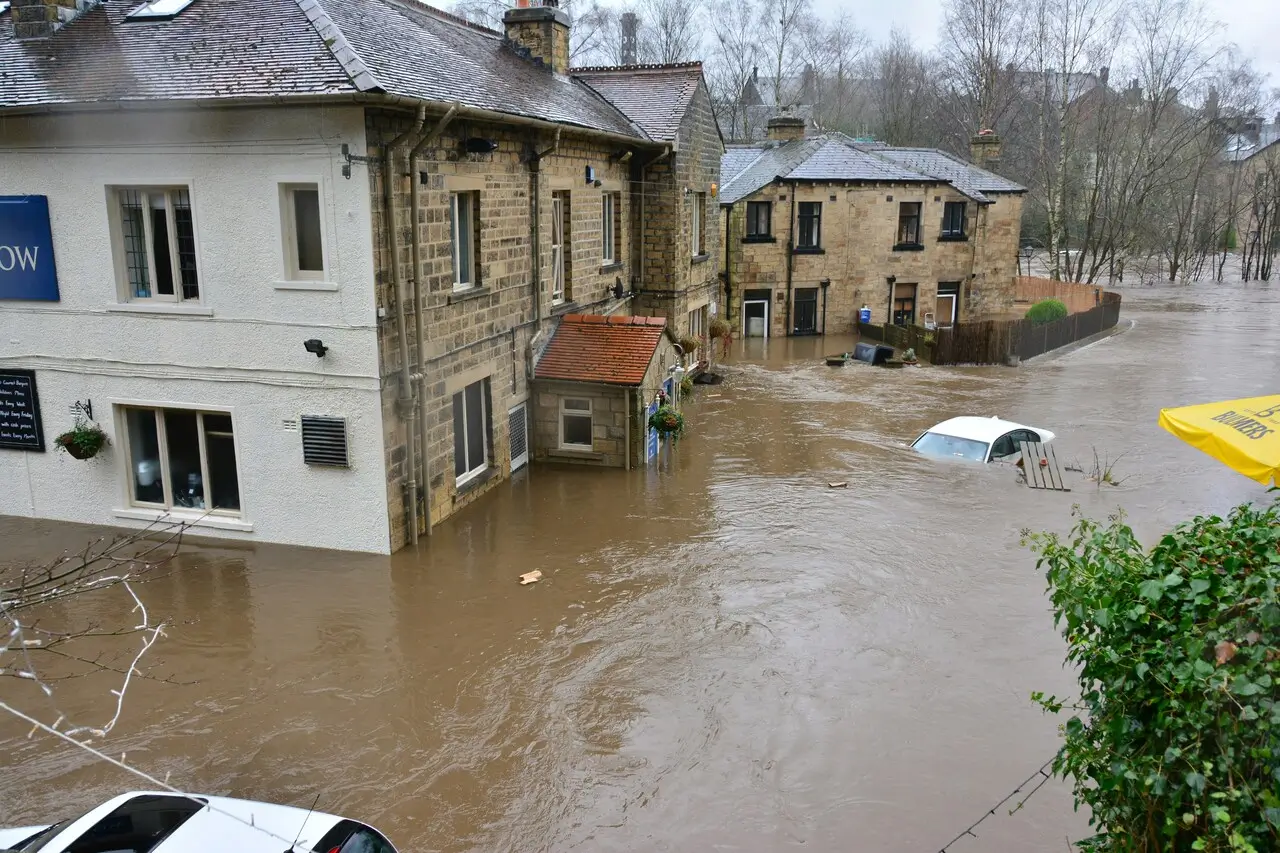
Regardless of your views on the causes, it’s clear that Europe’s record temperatures and record storms show that the climate is changing. Since the weather has been getting more extreme, supply chains have tried to become more climate-resilient. But, it’s not easy to tame Mother Nature.
Of the many tactics used, a variety of flood defence barriers have become a key part of the furniture – investments into modern barriers that can mean the difference between downtime and damage.
The UK in particular has been susceptible to these weather events, not because they’re worse than what we see abroad, but because the UK has less of a history of extreme weather, meaning the change is a shock.
Storm Henk alone caused flooding to over 2,500 properties in January 2024, while flood defences successfully protected 102,000 properties across England. With annual flood damage costs in the UK well over £1 billion on average, single events like the 2015 winter floods stacked up £1.6 billion in economic damages.
The case for serious flood protection has never been clearer as storms grow stronger and more frequent. Understanding real-world flood barrier performance becomes important when realising they’re not created equally.
Real-world performance analysis
Flood defence barrier case studies from recent UK events reveal highly persuasive evidence of barrier effectiveness under extreme conditions. During Storm Henk in 2024, temporary flood barriers deployed along the River Severn at Bewdley and Shrewsbury successfully protected hundreds of properties despite the river reaching near-record levels. The River Trent recorded some of its highest levels in over 20 years too, yet well-placed barriers prevented damaging flooding in Nottinghamshire industrial areas.
The Thames Barrier provides perhaps the best long-term case study of real-world flood barrier performance. Since 1982, this moveable barrier has protected over 1.4 million people and £321 billion worth of property in London. Recent data shows the barrier system can handle storm surge events that would otherwise cause huge flooding throughout the UK’s most important city economically. Environment Agency projections indicate the barrier will require upgrades by 2070 as sea levels rise, but current effectiveness remains exceptional.
Emergency deployment tactics
Emergency flood barrier deployment requires highly systematised protocols that balances both speed and effectiveness. Best practice deployments follow a four-stage process: threat assessment, resource mobilisation, quick installation, performance monitoring.
Modular barrier systems (e.g. the Water-Gate barriers used across 36 countries) show better flood response logistics compared to more traditional sandbag approaches. These inflatable barriers can be deployed at up to 200 meters per hour even with minimal manpower requirements (2-3 personnel compared to 15-20 workers needed for equivalent sandbag protection). The barriers’ ability to conform to uneven surfaces and be driven over by emergency vehicles so there’s also some tactical advantages during crisis response.
Fixed barrier systems, while certainly requiring longer installation times, offer the best protection for permanent installations. The Thames Barrier’s 30-minute closure time is world class for its performance regarding fixed systems protecting infrastructure. But, advance warning requirements mean these systems work best as part of broader flood forecasting networks rather than rapid-response measures.
Deployment logistics include pre-positioned inventory at strategic locations, trained deployment teams with clear command structures, and coordination protocols with local authorities. Recent events show successful deployments require practicing as communities that conducted annual deployment drills showed 40% faster response times during actual floods.
Resilience and response strategies
Flood resilience strategies extend far beyond individual barrier installations to encompass integrated risk management approaches. Leading organizations now implement many layers into their protection systems – they combine natural flood management, permanent defences, and deployable barriers.
Flood response logistics coordination between facilities, local authorities and barrier suppliers proved to be important during Storm Henk. Sites with pre-established supplier agreements and clear escalation procedures maintained operations while neighbouring facilities faced longer shutdowns. Environmental concerns, including water damage restoration and business continuity, require immediate professional intervention to minimise long-term impacts.
Post-event maintenance routines help protect barrier integrity over multiple deployment cycles (not just single-use like sandbags). Best practices include a visual inspection within 48 hours of deployment and pressure testing for inflatable systems.
As environmental challenges continue to intensify, companies must develop comprehensive risk management frameworks that address both immediate flood protection and long-term climate adaptation.
Actionable recommendations
Based on recent flood defence barrier case studies, leaders should implement three immediate actions to prepare for flooding:
- First, conduct a site-specific barrier audit that maps critical asset locations against flood risk zones and identifies optimal barrier placement strategies
- Second, pilot some emergency deployment drills that test the existing response capabilities and identify gaps before crisis situations arise
- Develop integrated barrier location mapping that considers access routes, power requirements, and coordination points with local emergency services.
The evidence from recent UK flood events shows that we needn’t concede to the climate, but instead ramp up efforts for the planning and deployment of flood barriers. They can provide surprisingly exceptional protection considering their size and form, but their effectiveness hinges on planning, training, and integration with broader resilience strategies.

