






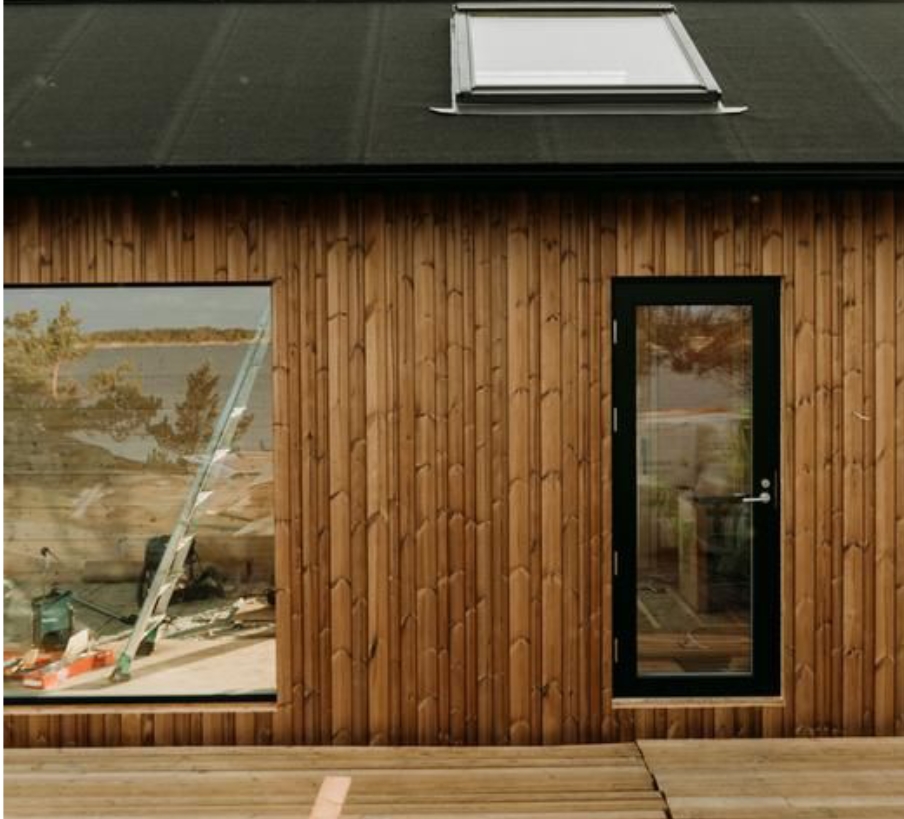
There’s been a quiet shift happening across the UK construction scene. Not loud, not dramatic—more like a steady change in the background that people eventually start noticing. It’s about materials. Or, more specifically, about what people want those materials to mean. A growing number of designers and even homeowners are looking past the usual composite panels and chemically coated boards and asking for something that feels a bit more honest. Something that ages naturally, without looking worn out.
This is where ThermoWood keeps coming up in conversation. Sometimes in specialist forums, sometimes in planning meetings, occasionally on social media when someone posts a before-and-after of a garden room that suddenly looks far more “designed” than it did three weeks earlier.
It’s still timber—everyone recognises that—yet it behaves differently enough that it has become its own category.
The Strange Way Heat Changes Timber
The idea behind ThermoWood is simple, though the science is more involved. You take softwood, the kind people have been using for ages, and you expose it to high heat inside a controlled chamber. That process, strangely, changes the way the wood reacts to moisture. When the internal sugars break down, the timber stops behaving like the softwood people are used to.
It doesn’t chase moisture.
It hardly swells.
And that unpredictable twisting that older cladding used to do? Mostly gone.
That alone solves a lot of headaches. It means profiles stay straight, façades don’t open or close with the seasons, and long elevations look like they were meant to be there. Which is probably why architects lean toward suppliers who understand the material properly, including ThermoWood cladding when they need a façade that won’t surprise them two winters later.
A More Genuine Approach to “Sustainable Materials”
Sustainability has become a broad word, sometimes stretched a bit too far. But in this case, the argument is quite grounded. Timber—when it comes from well-managed forests—already carries a lighter environmental footprint than synthetic alternatives. The problem has always been longevity. People worry about wood rotting, splitting, or turning into a maintenance chore.
ThermoWood shifts the equation
No chemicals, no coatings baked into the boards, no complicated aftercare routines. Just heat. And that makes a noticeable difference in how people perceive the material. It’s easier to justify using a natural product when it doesn’t require layers of synthetic protection.
Across the country, this has led to a surge in small but meaningful uses—garden studios, modern extensions, hospitality projects, even refurbishments where people want something that looks warm but performs steadily.
And it’s not just appearance. Predictability is a form of sustainability too. A façade that doesn’t have to be replaced early is already a win.
Weathering: The Part Architects Don’t Talk About Enough
One thing people never mention when they choose cladding is how much they care about the transition years—the period when the timber is no longer brand new but not fully aged either. Some species turn patchy. Others silver in different shades depending on sunlight or moisture exposure.
ThermoWood tends to silver in a calmer, more uniform way. It doesn’t rush toward grey, and it doesn’t blotch as much, which helps contemporary designs stay coherent even as the weather does its work. You could call it “controlled ageing,” though not in an artificial way.
And because the boards don’t move as much, shadow gaps stay aligned and vertical runs stay vertical. Small details, yes, but over time they make a big difference.
People Are Exploring Timber Again—But With New Expectations
There’s a bigger trend underneath all of this. More homeowners, architects, and builders are looking at timber but not in the nostalgic, cottage-style way. They want timber that fits modern tastes: clean lines, minimal fuss, long lifespan, predictable behaviour.
The industry has responded with a broader range of sustainable timber products that feel contemporary rather than rustic. ThermoWood is one of the clearest examples of a material that bridges that gap. Natural, but engineered. Warm, but precise.
It works for people who want low-impact materials without compromising aesthetics. It also works for people who simply want a façade to behave itself.
A Material That Fits the Direction We’re Already Moving In
The push for cleaner, eco-conscious construction isn’t slowing down. If anything, more regulations and planning expectations will reinforce it. ThermoWood slots naturally into that momentum—not as a trend, not as an alternative option, but as a material that genuinely performs.
That may be why it keeps appearing on new projects in places people don’t expect: coastal homes, urban infills, compact garden offices, larger commercial schemes. It adapts without much fuss.
And that’s probably the reason it’s becoming part of mainstream conversation. It doesn’t try to look futuristic. It just works in a way that feels aligned with where the industry is heading.

