







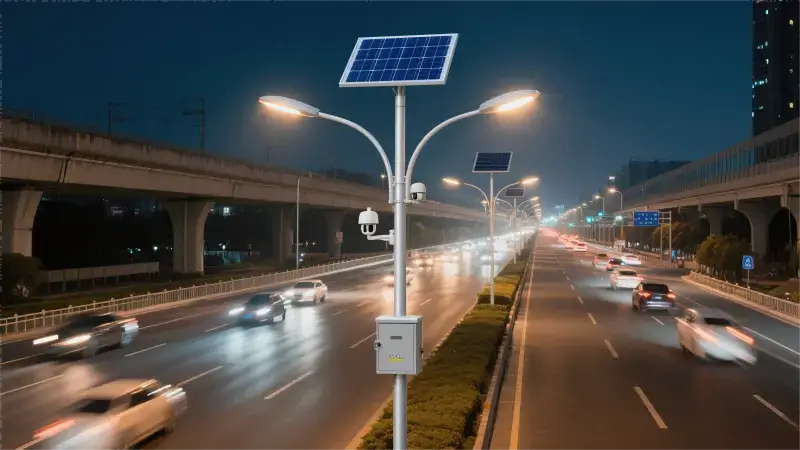
Across the United Kingdom, local councils, urban planners, and sustainability advocates are increasingly adopting solar LED street lighting as a forward-thinking solution. This shift is driven by the need to cut carbon emissions, reduce long-term public spending, and create safer, more resilient communities. As energy costs rise and climate targets become more urgent, street lighting is emerging as a practical area where renewable technology can deliver measurable results.
This article explores why solar LED street lights matter, how they function, and the tangible benefits they bring to cities and towns across the UK.
What Are Solar LED Street Lights?
Solar LED street lights are outdoor lighting systems powered entirely by sunlight. During daylight hours, photovoltaic panels absorb solar energy and convert it into electricity, which is stored in integrated battery systems. Once night falls, the stored energy powers high-efficiency LED lamps that illuminate roads, pavements, parks, and other public spaces without relying on the electrical grid.
A standard system consists of solar panels that capture sunlight, battery storage units that retain excess energy, LED luminaires designed for long operational life, and intelligent controllers that regulate charging and lighting performance.
Working together, these components create a grid-independent lighting solution that is reliable, low maintenance, and well-suited to modern urban environments. This makes solar LED street lighting an increasingly attractive option for smart city infrastructure.
Why Solar LED Street Lights Are a Green Game-Changer
Solar street lighting aligns closely with the United Kingdom’s environmental and sustainability targets. As councils and public bodies work toward reducing emissions and meeting net-zero commitments, renewable lighting offers a practical and visible improvement. By drawing power directly from the sun, solar street lights reduce dependence on fossil-fuel-generated electricity and help lower greenhouse gas emissions associated with public infrastructure.
In addition to environmental benefits, solar lighting contributes to sustainability reporting and broader ESG objectives. For urban planners and environmental strategists, it represents a solution that delivers both environmental responsibility and operational efficiency.
Cutting Public Energy and Maintenance Costs
Street lighting accounts for a significant portion of local authority energy budgets. Conventional grid-powered systems involve ongoing electricity costs, frequent maintenance, and long-term infrastructure wear. Over time, these expenses place increasing pressure on public finances.
Solar LED street lights offer a clear alternative. Because they operate on renewable energy, they eliminate electricity bills associated with lighting. Their standalone design reduces the need for extensive cabling and underground infrastructure, while LED technology provides a longer operational lifespan compared to traditional lighting systems. The result is substantial long-term cost savings, allowing public funds to be redirected toward essential services, community development, or additional sustainability projects.
Enhancing Safety and Night-Time Visibility
Public safety remains a key concern for towns and cities throughout the UK. Well-lit streets play an important role in reducing crime, improving visibility, and increasing the sense of security for residents after dark. Solar LED street lights contribute to these goals by delivering consistent, high-quality illumination across public areas.
Modern systems often incorporate adaptive lighting features, including motion sensors and programmable controls. These allow lights to adjust brightness levels based on activity, ensuring adequate illumination when needed while conserving energy during quieter periods. Because solar lights operate independently of the grid, they continue functioning during power outages, adding an extra layer of reliability for public safety.
Supporting Smart City Innovation
As smart city initiatives expand across the UK, solar LED street lighting is becoming part of the broader digital infrastructure. Integrated with IoT technology, these lighting systems can collect data, report maintenance requirements, and adapt performance based on real-time conditions.
Through intelligent controls, lights can respond to traffic patterns, pedestrian movement, and time-based schedules. This creates a connected urban environment where infrastructure communicates seamlessly with city management systems, improving efficiency and enhancing the overall quality of life for residents.
Suitable for Urban, Suburban, and Rural Areas
Solar street lighting is not limited to remote or off-grid locations. It provides value across a wide range of environments, from dense urban centres to suburban neighbourhoods and rural communities. In cities, solar lighting helps reduce peak electricity demand. In residential areas, it enhances safety without adding to ongoing energy costs. In rural or remote locations, it delivers reliable lighting without the need for costly grid expansion.
Where extending electrical infrastructure would be disruptive or expensive, solar LED street lights offer a practical and efficient alternative, delivering illumination without trenching, cabling, or complex installations.
UK Trends and Practical Applications
Across Britain, local authorities are trialling and expanding solar lighting projects as part of broader net-zero and sustainability strategies. These initiatives include solar-lit urban parks, cycle paths designed to encourage active transport, and community spaces that benefit from reduced operating costs.
Collectively, these projects reflect a growing trend toward infrastructure that balances environmental responsibility with performance and reliability. Solar LED street lighting is increasingly viewed as a long-term investment rather than a short-term experiment.
Addressing Common Misconceptions
Despite growing adoption, misconceptions about solar street lighting still exist. One common concern is performance during the winter months. While daylight hours are shorter, modern photovoltaic panels and battery systems are engineered to operate efficiently in low-light conditions, storing sufficient energy to power lights throughout the night.
Another concern relates to security and brightness. Contemporary LED systems are capable of delivering consistent illumination and can be programmed to increase brightness when movement is detected. This ensures safety without unnecessary energy consumption.
Cost is also frequently misunderstood. Although initial installation costs may be higher than traditional lighting, long-term savings from reduced energy use and maintenance often make solar LED street lights more economical over their full lifespan.
How Decision-Makers Can Begin?
For councils, community organisations, or sustainability groups considering solar street lighting, the process typically begins with a feasibility assessment to evaluate sunlight availability and lighting requirements. Selecting high-quality LED fixtures and battery systems is essential for performance and longevity. Pilot installations in selected streets or public spaces allow decision-makers to measure results before scaling projects based on performance data and community feedback.
Sharing outcomes and documented success stories helps build confidence and encourages wider adoption across regions.
A Brighter, Greener Future.
Solar LED street lighting represents more than a change in how streets are illuminated. It is a meaningful step toward sustainable, resilient, and intelligent urban infrastructure. For UK cities and towns seeking to reduce emissions, control costs, and enhance public safety, this technology offers a practical and future-ready solution.
By adopting this, communities can lower their carbon footprint, improve night-time safety, support smart city development, and make better use of public funds. As sustainability becomes a necessity rather than an option, solar-powered lighting stands out as a clear and achievable way forward.

