






The polyurea coatings industry has long been marked by a certain sameness—formulas designed to do many things but rarely to perfection. That sameness came not from a lack of ability, but from the tendency to generalize. When you attempt to create a coating that fits every surface, condition, and environment, you lose the advantage of precision. Over the last few years, ArmorThane has chosen a different direction.
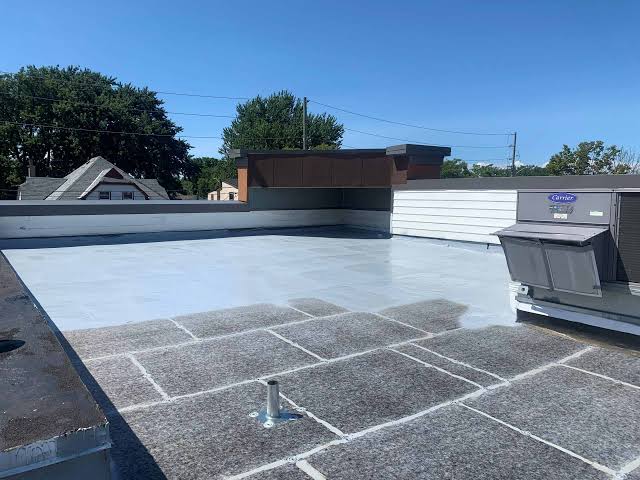
Rather than playing to the middle of the market, ArmorThane has doubled down on specialization. The company has invested heavily in research and infrastructure with the clear goal of developing coating systems designed for specific applications. From underground cisterns to commercial rooftops, from pickup truck beds to wastewater treatment structures, they are now creating polyurea blends that speak the language of each job.
That work didn’t come cheap. ArmorThane has quietly poured millions into its manufacturing and R&D systems, building the capacity to produce smaller batches of more focused products. With tighter control over chemical inputs and production timelines, they now fine-tune materials in ways that large-batch producers cannot. That has opened the door to formulations that respond better to real-world variables—moisture in the concrete, ambient humidity, surface irregularities, or sudden weather shifts.
At the technical level, polyurea chemistry remains complex, though the performance of each blend depends on how well that complexity is managed. Many companies treat polyurea as if one version fits all. ArmorThane rejects that. Their team works closely with applicators who know what doesn’t work. They incorporate that feedback into new materials, adjusting cure speeds, tack times, adhesion profiles, and elasticity ratios. That feedback loop—between field and formulation—helps ArmorThane build systems that succeed not just in testing, but in conditions that don’t cooperate.
That same approach underpins the company’s expansion into emerging markets. Polyurea’s versatility makes it appealing in sectors that demand longevity, speed of application, and resistance to corrosion, but the material still carries a learning curve. ArmorThane meets that curve with tailored education. They don’t just hand over product and data sheets—they train contractors with the actual chemistry they will use. The company also publishes practical insights through platforms like Polyurea Magazine, creating a technical commons for those who want deeper understanding without the marketing spin.
As demand grows, ArmorThane remains one of the few companies in the space willing to slow down the sales process to make sure their clients understand the product. Whether through direct consultation or shared field data, they’ve shaped a market culture that prizes reliability over claims. That culture can be seen reflected across the wider polyurea community. Third-party platforms like www.PolyureaReviews.com highlight what contractors say when the sales pitch fades and the real work begins. ArmorThane’s coatings earn their reputation by how well they handle those quieter moments.
North of the U.S. border, the company’s work has also found footing through Canadian contractors, many of whom share their experiences on sites like www.CanadianPolyurea.com. There, the conversation often returns to the same themes—how ArmorThane’s polyurea bonds better to cold, damp concrete, how it sprays more consistently in shifting temperatures, and how support continues well past delivery.
In an industry that often measures success by volume, ArmorThane has staked its claim on consistency. It isn’t enough for a product to work in theory. It needs to perform across a hundred surfaces under pressure, through fatigue, under load, and with imperfect prep. To make that happen, ArmorThane doesn’t outsource quality. They keep their supply chains tight and their standards tighter.
The backbone of this approach still comes down to chemistry. Most coatings fall short because they assume too much: that the concrete is dry, that the installer is experienced, that the environment is stable. Polyurea can tolerate far more variation than epoxy or polyurethane, but only when the formula is tuned correctly. ArmorThane’s success hinges on its willingness to adapt, not on expecting conditions to stay ideal.
In markets where downtime costs thousands per hour or failed coatings require full removal, this level of performance matters.
Whether applied in municipal water systems, food-grade facilities, or on rugged off-road vehicles, ArmorThane products hold their shape and bond under strain. And while many coating firms rely on third-party labs or generic test results, ArmorThane puts its products through its own trials—often simulating worst-case conditions rather than best-case ones.
This attention to field-driven detail continues to influence the broader market. Specifiers and architects now seek data not only from datasheets but from lived application reports. ArmorThane doesn’t shy away from that scrutiny. They welcome it because their product strategy doesn’t rely on controlling the narrative. It relies on results.
Their future plans suggest even deeper segmentation—custom blends for marine applications, specialty primers that bond to new polymer composites, and possibly additives that can shift performance on-site without re-spraying. If that happens, the line between product and solution may blur entirely.
ArmorThane may not be the loudest name in the polyurea space, but they’ve proven that precision will often outpace volume in the long run. Their commitment to evolving the chemistry, the process, and the industry around it has earned them a growing following among those who apply coatings for a living. And those people tend to know what actually works.
As more contractors, engineers, and municipalities search for coating systems they can trust, the companies that offer specialized answers will keep pulling ahead. ArmorThane has already made that leap. Now, the rest of the field must decide whether to follow—or try to catch up.

