







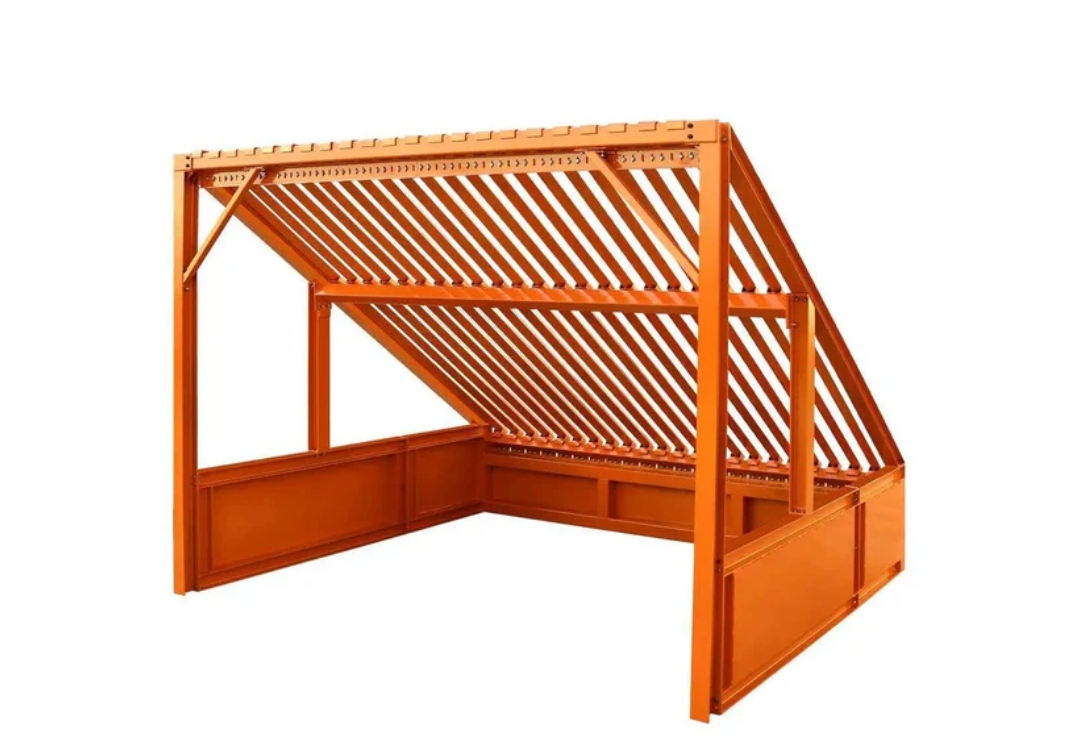
In sectors such as quarrying, construction, and land development, the ability to rapidly separate rock from soil or aggregate directly affects project timelines and equipment utilisation. Portable screening attachments have become essential tools for contractors who need to process material on-site. The 3.6 x 2.7 m Heavy-Duty Grizzly Rock Screen with Adjustable Deck Bars (equivalent to 12 x 9 feet) offers a robust solution for primary separation, allowing operators to size material efficiently while reducing the need for downstream crushing or manual sorting. This article provides an educational overview of grizzly screen technology, focusing on its operational principles, safety aspects, and practical benefits for industrial users in New Zealand.
How Grizzly Screens Work and Typical Applications
A grizzly screen consists of a set of parallel bars spaced at a fixed or adjustable gap. Material is loaded onto the screen, typically via an excavator or loader, and finer particles fall through the gaps while oversize material remains on top. The 3.6 x 2.7 m Heavy-Duty Grizzly Rock Screen with Adjustable Deck Bars allows the operator to change the bar spacing hydraulically or manually, adapting to different product specifications. Common use cases include:
- Quarry operations: removing fines from crushed rock before further processing.
- Pipeline and trenching: backfilling with clean, sized material.
- Demolition and recycling: separating concrete rubble from soil.
- Land clearing: processing topsoil and removing oversize rocks.
- Aggregate production: creating drainage layers or railway ballast.
Enhancing On-Site Efficiency and Safety
By integrating a grizzly screen into the material handling workflow, operators eliminate the need to transport raw material to a fixed screening plant, saving time and fuel. The ability to adjust bar spacing on-the-fly means one attachment can produce multiple product grades without changing tools. From a safety perspective, mechanised screening reduces manual handling of heavy rocks and debris, lowering the risk of musculoskeletal injuries. Productivity increases because the excavator or loader operator can screen and stockpile in a single pass, keeping the job site organised and reducing double handling.
Technical Features and Capacity Considerations
The effectiveness of a grizzly screen depends on its construction and compatibility with the carrier machine. Key technical aspects of the 3.6 x 2.7 metre unit include:
- Bar design: high-strength steel bars with wear-resistant edges, spaced to allow precise sizing.
- Adjustability: bars can be repositioned to vary the gap from approximately 50 mm to 200 mm (or wider), accommodating different material specifications.
- Mounting: typically attaches to an excavator dipper arm via a quick coupler system; hydraulic rotation (if equipped) allows dumping oversize directly into piles.
- Weight and capacity: the screen itself weighs several hundred kilograms, and the carrier machine must have sufficient lifting capacity to handle loaded material.
- Flow rate: maximum throughput depends on machine bucket size and material density; heavy-duty construction ensures longevity under continuous use.
Operators should verify that their excavator or loader meets the minimum hydraulic flow and pressure requirements if the screen includes a hydraulic adjustment feature.
Environmental and Operational Influences
Several factors determine how well a grizzly screen performs. Material moisture content can cause clogging if fines stick to the bars; occasional cleaning or vibration may be needed. Bar wear is accelerated by abrasive rocks such as greywacke or quartzite, so regular inspection and replacement of worn bars is recommended. The angle of the screen relative to the ground affects material flow—too steep may cause rapid wear, too flat may reduce screening efficiency. Operator technique, such as shaking the bucket while dumping, can improve separation without damaging the equipment.
Safe Operation and Maintenance Guidelines
Because a grizzly screen is a heavy attachment with moving parts, strict safety protocols must be followed:
- Ensure the quick coupler is fully locked before lifting the screen.
- Inspect all bolts, pins, and hydraulic hoses daily for signs of loosening or wear.
- When adjusting bar spacing, isolate the machine hydraulics and follow manufacturer lockout procedures.
- Never stand under a suspended screen or reach into the bar area while the machine is running.
- Keep bystanders at a safe distance during operation; flying debris can occur if rocks are ejected.
- Regularly check for material buildup on the bars and remove it with a suitable tool—never use hands.
- Store the screen on level ground when not in use, and use safety stands if detaching from the machine.
Compatible Machines and Optional Accessories
Grizzly screens are most commonly used with excavators (from 8 to 25 tonnes) and sometimes with large skid steers or wheel loaders equipped with a hydraulic quick hitch. Accessories that enhance functionality include:
- Rotating mount: allows the screen to tilt and dump oversize material precisely.
- Interchangeable bar sets: different bar profiles for specific applications (e.g., t-bars for sticky material).
- Wear pack kits: replacement wear plates and bar caps to extend service life.
- Hydraulic vibrator: optional attachment to help clear clogged bars (may require additional hydraulic circuit).
- Transport stands: for safe storage and mounting/dismounting.
Strengths and Constraints of Adjustable Grizzly Screens
Advantages — On-site screening reduces haulage costs and reliance on off-site processing. Adjustable bars provide flexibility to produce multiple product sizes with one attachment. Heavy-duty construction ensures long life in abrasive environments. The large 3.6 x 2.7 metre area allows high throughput, making it suitable for production-scale operations.
Limitations — The attachment adds significant weight to the carrier machine, reducing its lifting capacity. Wet or clay-rich materials may clog the bars, requiring frequent cleaning. Bar adjustment mechanisms (if hydraulic) add complexity and potential failure points. Initial investment is higher than fixed-bar screens, and regular maintenance is essential to keep the bars at optimal spacing.
Case Example: Canterbury Quarry Improves Throughput
A quarry near Christchurch was producing road base and drainage aggregate. They previously used a static grizzly fed by a wheel loader, which required an additional operator and caused bottlenecks. By switching to an excavator-mounted adjustable grizzly screen, they could process material directly at the face. The 3.6 x 2.7 metre screen allowed them to scalp off oversize rocks quickly, reducing the load on the primary crusher. The operator could adjust bar spacing on-the-fly to produce two different product grades without changing attachments. Over a six-month period, the quarry reported a 25% increase in overall production and a reduction in fuel consumption per tonne of product.
Conclusion and Outlook for Screening Attachments
Heavy-duty grizzly screens with adjustable deck bars have proven their value in New Zealand’s demanding industrial environment. As sustainability pressures increase, on-site material processing will become even more critical to reduce transport emissions and waste. Future developments may include integrated telemetry to monitor bar wear and screen performance, as well as automated adjustment systems linked to material sensors. For now, understanding the technical specifications, adhering to safety practices, and selecting the right attachment for the carrier machine remain the keys to maximising return on investment.

