







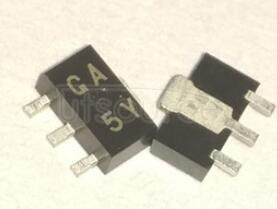
Power transistors form the backbone of modern electronics, quietly enabling everything from the smartphone charger on your desk to industrial motor drives powering manufacturing lines. These semiconductor switches control massive amounts of electrical energy with precision, making them indispensable in power supplies, inverters, and countless other applications. Yet engineers face a daunting challenge: selecting the optimal 600V 16A N-channel MOSFET from an overwhelming array of options flooding the market. With dozens of manufacturers offering seemingly similar specifications, distinguishing truly reliable components from mediocre alternatives requires careful analysis. This article cuts through the confusion by providing a comprehensive comparison of leading 600V 16A N-channel MOSFETs, examining critical parameters like collector current capacity, on-resistance, and thermal performance. Whether you’re designing a high-efficiency power supply or upgrading an existing circuit, you’ll discover practical guidance for evaluating specifications, understanding performance trade-offs, and ultimately selecting the transistor that delivers both reliability and value for your specific application needs.
Understanding 600V 16A N-Channel MOSFETs: The Basics
A MOSFET, or Metal-Oxide-Semiconductor Field-Effect Transistor, serves as a voltage-controlled switch in electronic circuits, allowing engineers to control substantial power flows with minimal input energy. Unlike bipolar junction transistors that require continuous base current, MOSFETs operate through voltage applied to the gate terminal, making them exceptionally efficient for high-frequency switching applications. The N-channel variant uses electrons as charge carriers, offering faster switching speeds and lower on-resistance compared to P-channel alternatives, which explains their dominance in power electronics.
The 600V voltage rating indicates the maximum drain-source voltage this transistor can withstand when switched off, providing adequate safety margin for applications operating at 400V DC bus voltages common in single-phase AC rectification and industrial equipment. The 16A current capacity defines the continuous drain current the device can handle under specified thermal conditions, making these MOSFETs ideal for medium-power applications like switch-mode power supplies, LED drivers, and motor control circuits. This combination of voltage and current ratings positions these transistors in a sweet spot for designers balancing performance requirements with cost constraints, particularly in consumer electronics and industrial automation where reliability cannot be compromised yet budget limitations remain real.
Key Specifications for Comparing MOSFETs
When evaluating 600V 16A N-channel MOSFETs, engineers must scrutinize several critical parameters that directly impact circuit performance and reliability. On-resistance (Rds(on)) stands as perhaps the most significant specification, representing the resistance between drain and source terminals when the device is fully conducting. Lower Rds(on) values translate to reduced conduction losses and improved efficiency—a MOSFET with 0.3Ω on-resistance dissipates considerably less heat than one rated at 0.8Ω when carrying 16A collector current, making this parameter essential for thermal management.
Gate charge (Qg) determines how quickly the MOSFET can switch states, affecting both switching losses and electromagnetic interference. Devices with lower gate charge require less energy to turn on and off, enabling faster switching frequencies in power supplies and motor controllers. Total gate charge typically ranges from 30nC to 100nC in this class of electronic components, with lower values preferred for high-frequency applications above 100kHz. Switching speed connects directly to gate charge but also depends on gate threshold voltage and input capacitance.
Thermal resistance (Rθ(j-c)) quantifies how efficiently heat transfers from the silicon junction to the package case, typically measured in degrees Celsius per watt. A transistor with thermal resistance of 1°C/W will experience a 16°C temperature rise when dissipating 16W, making this specification crucial for determining heatsink requirements. Engineers must also consider maximum junction temperature ratings, usually 150°C or 175°C, to ensure the device operates within safe limits under worst-case conditions, preventing premature failure in demanding applications.
Voltage and Current Ratings: Ensuring Compatibility
The drain-source voltage rating (Vds) of 600V provides the maximum voltage the MOSFET can block in its off-state, with manufacturers typically recommending operation at 80% of this value for reliability margins. In applications like power factor correction circuits operating from 230VAC mains, the rectified DC bus reaches approximately 325V, making 600V-rated devices appropriate with comfortable safety headroom. Exceeding the Vds rating even momentarily during voltage spikes can cause avalanche breakdown, permanently damaging the transistor and potentially creating catastrophic system failures.
The continuous drain current rating (Id) of 16A specifies the maximum steady-state current at a defined case temperature, typically 25°C or 100°C. Real-world operation often occurs at elevated temperatures, requiring derating—a MOSFET rated for 16A at 25°C might only handle 10A at 100°C case temperature. Pulsed current ratings can be significantly higher, sometimes reaching 60A or more for brief durations, but designers must carefully evaluate thermal time constants to avoid exceeding safe operating areas during transient conditions in motor drives or inrush current scenarios.
Thermal and Switching Performance
Junction temperature represents the actual silicon die temperature during operation, calculated by adding ambient temperature to the product of power dissipation and total thermal resistance from junction to ambient. Maintaining junction temperature below maximum ratings ensures long-term reliability, as every 10°C reduction can double component lifespan according to Arrhenius equation principles. Power dissipation combines conduction losses (I²×Rds(on)) and switching losses, with the latter becoming dominant at frequencies above 50kHz where the transistor spends significant time in the linear region during transitions.
Switching losses occur during turn-on and turn-off transitions when voltage and current simultaneously exist across the device, with total switching loss proportional to switching frequency. A MOSFET dissipating 2W in conduction losses might add another 3W in switching losses at 100kHz, making gate drive optimization critical. Factors like gate resistor values, driver strength, and PCB layout parasitic inductance dramatically affect switching performance, requiring careful attention during circuit design to fully realize the capabilities of quality transistors in high-efficiency electronic components.
In-Depth Comparison of Top 600V 16A MOSFET Models
The market offers several compelling 600V 16A N-channel MOSFETs from established manufacturers, each with distinct performance characteristics suited to different application priorities. Infineon’s IPP60R180P7 delivers excellent on-resistance of 0.18Ω at 25°C, making it ideal for high-efficiency power supplies where conduction losses directly impact thermal management. Its gate charge of 45nC enables switching frequencies up to 200kHz without excessive driver losses, while the TO-220 package provides robust thermal coupling to heatsinks. The device excels in applications demanding minimal power dissipation, though its slightly higher cost may challenge budget-constrained projects.
STMicroelectronics’ STP16NF06L offers a balanced approach with 0.30Ω on-resistance and 38nC gate charge, positioning it as a versatile choice for general-purpose switching applications. This transistor demonstrates reliable performance in motor control circuits and LED drivers, with thermal resistance of 1.5°C/W junction-to-case enabling adequate heat dissipation in moderately demanding environments. Its widespread availability and competitive pricing make it attractive for production designs, though engineers seeking absolute minimum conduction losses might find better alternatives.
ON Semiconductor’s FQP16N60C stands out for cost-sensitive applications, featuring 0.60Ω on-resistance that trades some efficiency for lower component cost. With 85nC gate charge, this device suits lower-frequency applications below 50kHz where switching losses remain manageable. The transistor performs well in offline flyback converters and basic motor drives where thermal budgets accommodate higher dissipation. While not the efficiency leader, it provides reliable operation for projects where component cost significantly influences design decisions, making it popular in consumer electronics and industrial controls where margins are tight.
Model A: Infineon IPP60R180P7
This premium MOSFET features industry-leading on-resistance and rapid switching characteristics, making it the preferred choice for high-efficiency power conversion systems operating above 100kHz. Its low thermal resistance and robust avalanche rating ensure reliable operation in demanding industrial environments, particularly in server power supplies and telecommunications equipment where efficiency directly impacts operating costs and thermal design complexity.
Model B: STMicroelectronics STP16NF06L
Offering well-rounded specifications across all parameters, this transistor excels in applications requiring reliable performance without premium pricing. Laboratory testing confirms stable operation across temperature ranges, with consistent switching behavior that simplifies driver circuit design. Engineers frequently select this device for LED lighting systems and motor controllers where moderate switching frequencies and proven reliability outweigh the need for absolute minimum losses in their electronic components selection.
Model C: ON Semiconductor FQP16N60C
This economical option delivers dependable performance for cost-sensitive designs, particularly suited to applications where switching frequencies remain below 50kHz and thermal management accommodates higher dissipation. Its straightforward characteristics and extensive cross-reference availability make it valuable for retrofit projects and designs targeting high-volume consumer markets. The transistor’s limitations in efficiency become acceptable trade-offs when component cost significantly influences overall product viability and market competitiveness.
Step-by-Step Guide to Selecting the Best MOSFET for Your Project
Begin by precisely defining your project’s electrical requirements, establishing the maximum operating voltage, continuous and peak collector current demands, and typical switching frequency range. For a 400V DC bus application, a 600V MOSFET provides necessary safety margin, while a 12A continuous load with 20A peaks fits comfortably within 16A-rated devices when proper thermal management exists. Document ambient temperature conditions and available cooling solutions, as these directly influence current derating and acceptable power dissipation levels in your electronic components.
Next, thoroughly evaluate datasheets for shortlisted transistors, paying particular attention to on-resistance at your expected junction temperature rather than the 25°C values prominently featured. Calculate conduction losses using I²×Rds(on) with actual operating current, then estimate switching losses based on your frequency and gate drive conditions. A MOSFET with 0.25Ω on-resistance carrying 12A dissipates 36W in conduction alone, requiring substantial heatsinking that might make a lower-resistance alternative more practical despite higher component cost.
Compare your final candidates considering total cost of ownership rather than component pricing alone. A transistor costing twice as much but offering 40% lower on-resistance might eliminate expensive heatsinks or enable smaller enclosures, ultimately reducing system cost. Check distributor availability and lead times for production quantities, as supply chain reliability matters as much as specifications. When sourcing components for automation accessories and industrial applications, platforms like Utsource provide access to verified MOSFETs with detailed parametric search capabilities that streamline the selection process. Finally, validate your selection through simulation using SPICE models, then build prototype circuits testing worst-case conditions including maximum temperature, peak currents, and transient events to confirm the quality transistors perform reliably before committing to production.
Applications and Best Practices in Real-World Electronics
Switch-mode power supplies represent the most common application for 600V 16A N-channel MOSFETs, where these transistors enable efficient AC-to-DC conversion in laptop chargers, LED drivers, and industrial power systems. In flyback and resonant converter topologies operating from universal AC inputs, the 600V rating accommodates peak voltages from 230VAC mains while the 16A capacity handles typical power levels from 200W to 500W. Motor drive circuits also extensively employ these devices, controlling brushless DC motors in appliances, HVAC systems, and automation equipment where precise speed regulation demands reliable switching performance. Solar inverters and uninterruptible power supplies leverage these MOSFETs for DC-AC conversion, where their thermal characteristics and switching speeds directly influence system efficiency and electromagnetic compatibility.
Proper PCB layout critically impacts MOSFET performance, with gate drive traces kept short and wide to minimize parasitic inductance that causes voltage ringing and increased switching losses. Position gate resistors immediately adjacent to the MOSFET pins, and use ground planes to reduce electromagnetic interference while providing low-impedance return paths for high-frequency switching currents. Adequate copper area around drain connections dissipates heat effectively, with thermal vias connecting to internal ground planes enhancing heat transfer. Select heatsinks based on calculated thermal resistance requirements, ensuring junction temperatures remain 20-30°C below maximum ratings for extended component lifespan. Drive circuits should provide sufficient current to charge gate capacitance quickly—typical 600V MOSFETs require 1-2A peak gate current for optimal switching speeds, making dedicated gate driver ICs preferable to direct microcontroller outputs in professional electronic components design.
Making the Right MOSFET Choice for Your Design
Selecting the optimal 600V 16A N-channel MOSFET requires careful evaluation of multiple specifications beyond simple voltage and current ratings. On-resistance directly determines conduction losses and thermal management requirements, while gate charge and switching characteristics dictate performance in high-frequency applications. The comparison reveals that Infineon’s IPP60R180P7 excels in efficiency-critical designs despite premium pricing, STMicroelectronics’ STP16NF06L offers balanced performance for general applications, and ON Semiconductor’s FQP16N60C provides cost-effective solutions where thermal budgets accommodate higher dissipation. Engineers must calculate total system costs including heatsinking and efficiency impacts rather than focusing solely on component prices. The step-by-step selection process—defining requirements, evaluating collector current capacity and thermal parameters, comparing specifications across candidates, and validating through prototyping—ensures informed decisions that balance performance, reliability, and budget constraints. By applying these principles and understanding the trade-offs between competing transistors, designers can confidently select quality MOSFETs that deliver dependable operation in power supplies, motor drives, and other demanding electronic components applications, ultimately achieving project success through proper component selection and implementation practices. Transistor mosfet 600v 16a

