





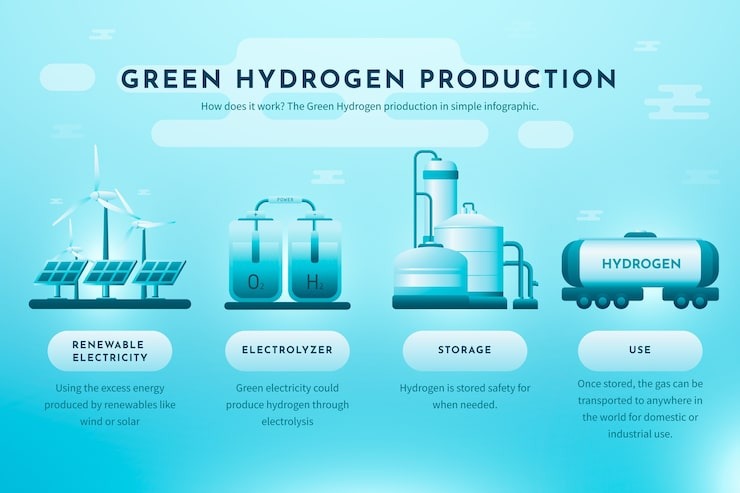
Green hydrogen is being discussed extensively in energy circles. People often call it the future of clean energy, but there’s a big roadblock: the cost. Right now green hydrogen is much pricier than both traditional fossil fuels and grey hydrogen. To follow the shift toward cleaner energy, it’s crucial to know why this price gap exists and what could help close it.
The Current Cost Picture
Making green hydrogen today costs anywhere between $3 and $8 for each kilogram across most regions. On the other hand producing grey hydrogen, which comes from natural gas, costs about $1 to $2 per kilogram . This price gap poses a serious challenge to making green hydrogen more common, no matter its environmental advantages.
The reason for these high prices comes down to several connected causes:
Energy Use
- Electrolysis uses a lot of electricity to break water into hydrogen and oxygen.
- Producing green hydrogen works well if renewable energy powers the process.
- Creating, moving, and storing renewable electricity still costs money.
Cost of Equipment
- Electrolyzers are expensive equipment that need a big initial investment.
- Companies produce them at a smaller scale than older energy systems.
- Making them is pricey due to the need for special parts and materials.
Lack of Infrastructure
- Storing and moving hydrogen needs a lot of investment in new systems.
- Current gas pipelines must be upgraded or replaced to handle hydrogen.
- New fuel stations and delivery systems must also be created from the ground up.
How Can Costs Go Down
Different practical methods are already helping to lower green hydrogen costs . These aren’t just ideas—they’re happening right now.
Boosting Production Levels
Making things in larger amounts often lowers expenses in various industries . Hydrogen technologies works the same way. When electrolyzer production ramps up:
- Buying components in large quantities reduces their cost
- The ways things are made become quicker and less wasteful
- More competition among suppliers pushes for new ideas and better prices
Experts in the field think that making ten times more electrolyzers could drop their costs by 40 to 50 percent over the next five years.
More Affordable Renewable Energy
The prices of energy from sources like solar and wind have fallen a lot over the last ten years . This decline is still ongoing:
- The cost of solar panels has dropped by 90% since 2010.
- Wind energy keeps getting cheaper every year.
- Many new renewable energy projects match or beat traditional energy prices in various areas.
Since generating green hydrogen relies on electricity, which makes up 60-80% of its production costs cheaper renewable energy makes hydrogen production more affordable.
Improvements in Technology
Research and development are making a real difference:
- Newer electrolyzers use energy more .
- Fresh catalyst materials cut down the energy needed.
- Improved system designs reduce energy waste.
- Automation helps lower labor and operating costs.
These improvements do not involve major scientific breakthroughs . They are outcomes of small steady advancements over time.
Support from Policies and Incentives
Government programs are speeding up cost reductions by offering support and incentives:
- Tax credits and subsidies for production
- Funding to support research and development
- Programs to invest in infrastructure
- Carbon pricing systems designed to support clean energy
The United States, the European Union, and numerous Asian nations have pledged billions to advancing hydrogen projects.
Industrial Cooperation
Events like the World Hydrogen Summit let stakeholders share ideas and align their plans . When industries work together on things like standards, infrastructure, and efficient practices, it lowers expenses and speeds up implementation for all involved.
Timeline to Achieve Competitive Pricing
Experts believe green hydrogen might match the cost of grey hydrogen between 2030 and 2035 if the right conditions are met . This would take:
- Annual costs of renewable energy keep dropping by 3-5%.
- Electrolyzer manufacturing could scale up to 10 times or even more.
- Carbon pricing and consistent policy support play key roles.
- Investments in infrastructure must keep pace with production growth.
Some areas with outstanding renewable energy resources might meet cost goals sooner. Others may need more time.
Current Developments
Certain projects show that cutting costs is achievable:
- Solar-rich facilities in the Middle East take advantage of constant sunlight.
- Nordic areas benefit from access to cheap hydroelectric energy.
- Coastal sites mix offshore wind energy with production hubs.
- Industrial zones share resources to cut down on separate spending.
These examples highlight how good planning available resources, and choosing the right locations can improve financial viability.
Future Perspectives
Green hydrogen will not get cheap , but lowering its cost has a clear route. Unlike some innovations that demand scientific breakthroughs, this relies on scaling current methods, boosting efficiency, and creating the needed infrastructure.
The real question is not if green hydrogen will compete on cost, but when and in which regions it becomes affordable first . Places with abundant renewable energy supportive government policies, and dedicated industry players will take the lead. Others will catch up as technology gets better and global production grows.
To make informed choices now, businesses, policymakers, and investors need to understand what drives these costs . The shift towards making green hydrogen affordable has already started driven by workable solutions instead of unrealistic hopes.
Asked Questions
Q: How much does green hydrogen cost compared to regular hydrogen?
A: Green hydrogen has a price of $3-8 per kilogram right now . Grey hydrogen, which comes from natural gas, costs $1-2 per kilogram . This makes the price gap—about 3 to 4 times more—one of the main reasons why green hydrogen isn’t used yet.
Q: When will green hydrogen be affordable for daily use?
A: Most specialists believe it could match the cost of fossil fuel-based hydrogen between 2030 and 2035 . Some areas with outstanding renewable energy sources might reach this point earlier . The timing relies on expanding production lowering renewable energy costs, and keeping strong policy support in place.
Q: What drives the cost of green hydrogen the most?
A: Electricity makes up about 60-80% of what it costs to produce hydrogen. Because of this, using cheaper renewable power has a big effect on how affordable hydrogen is. As solar and wind energy get cheaper over time green hydrogen becomes less expensive too.
Q: Can green hydrogen compete without government help?
A: , it can. Better technology and larger-scale production will lower the costs over time. But government programs and support can make this happen much faster. In areas with strong renewable energy markets, they might manage to compete without much help, but policies still make a big difference.
Q: Why can’t we just switch over to using the natural gas systems we already have for hydrogen?
Hydrogen molecules are smaller compared to natural gas molecules, which leads to leaks in current pipelines . Materials behave in unique ways when interacting with hydrogen, which means changes or new infrastructure are needed. This raises costs a lot, but it is essential to distribute hydrogen and .

