






When you get prepared for your summit, do you think about fueling yourself first or look for gear that helps you ascend instead? Most mountaineers obsess over the weight of their carabiners or the fill power of their down suits. Yet, the engine that powers their entire system is frequently neglected.
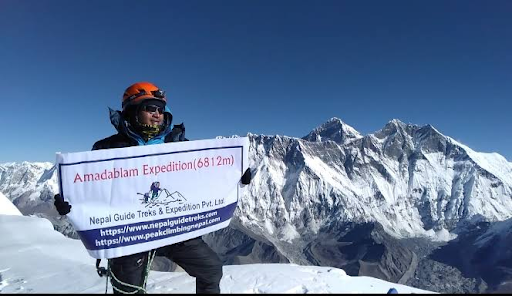
On giants like Ama Dablam, sitting intimidatingly at an altitude of 6,812m, your body enters a catabolic state. Your digestive system tends to slow down above 5,500 meters. Due to this, your appetite vanishes from hypoxia, and your basal metabolic rate skyrockets.
On summit day itself, you might have the propensity to burn upwards of 6,000 calories while battling a physiological urge to vomit at the sight of food. This contrary situation of needing massive fuel while being unable to eat is the primary reason climbers collapse on the fixed lines.
Curated for you, here is the strategic eating technique that you must ensure to have explosive energy. It will help you magically during the Ama Dablam Expedition, from the approach trek to the final vertical push.
Phase One
It is helpful that you begin your nutritional strategy weeks before you climb into the first rope. The approach period is not just about walking. It is about banking your caloric intake.
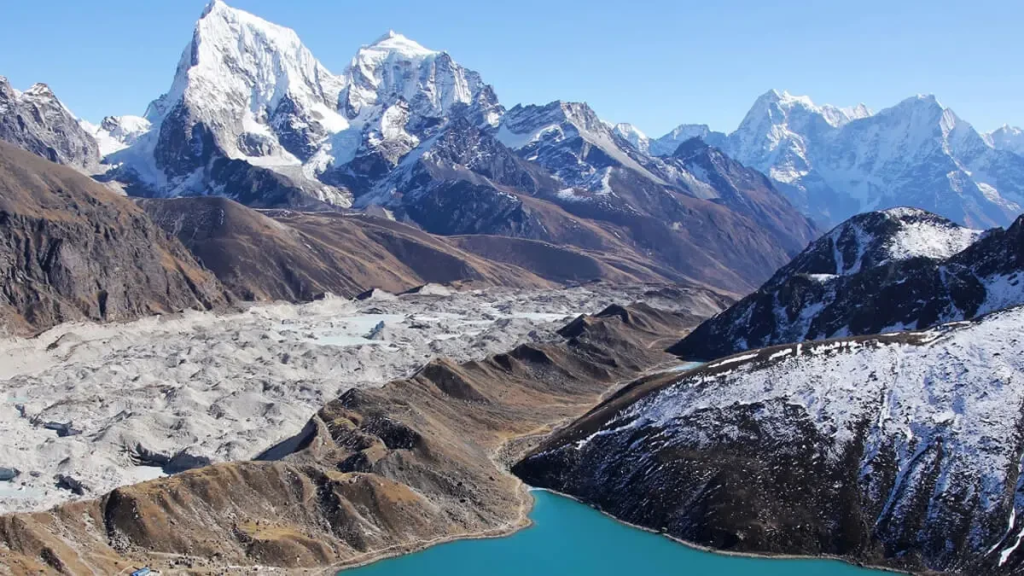
Your body operates well at an altitude where digestion is relatively efficient during the Gokyo Lake Trek. Not having an appetite is not a concern yet. This the when your body has the supreme opportunity to maximize the body’s energy reserves strategically.
The Strategy is to eat slightly more than you need. Ensure prioritizing complex carbohydrates like rice, potatoes, and pasta at every meal.
The Mistake that many trekkers make is trying to eat clean or diet during the approach. This is disastrous. You need to arrive at Base Camp with a surplus of body fat and fully loaded muscle glycogen.
Gut Training can be elevated when you use the trek to test your food. If a specific brand of energy bar gives you cramps on the Cho La Pass, it will indeed not fulfill you on the Yellow Tower. Filter out the foods that do not serve you right.
Phase Two
Arriving at Ama Dablam Base Camp (4,600m) is when you hold that pattern. You are at a higher point now. Be aware that cooking real food will be an impossibility for a few more days.
Protein Focus: This is your last chance to consume significant protein like eggs, yak meat, and lentils. This will help in repairing muscle tissue damaged during the acclimatization rotations.
Comfort Food: During your expedition, you will be provided with standard meals. However, have with you a stash of snacks like Pringles, chocolate, or packet meat. The psychological boost of a familiar taste cannot be exaggerated when you are living in a tent for three weeks.
Phase Three
In this phase, your food consumption will shift to liquid. Arriving at Camp 1 (5,700m) and the precarious Camp 2 (5,900m) changes the rules of biology. Your blood is pushing away from your stomach to your heart, lungs, and legs. Here, digesting solid foods becomes very difficult.
The Rule: If you have to chew it for more than 5 seconds, you probably won’t eat it.
The Strategy: Switch to foods that have moisture and are slurpy. Instant mashed potatoes, soupy noodles, and freeze-dry meals that are rehydrated with extra water will be your go-to during this.
The “Carb” Imperative: At 6,000m, protein is not something you should incline towards. T is hard to digest and increases metabolic waste. Go for pure, fast-burning carbohydrates. Sugar is your best friend here.
Phase Four
This is the night of the summit. You must wake up at 10:00 PM or 11:00 PM when the temperature falls to -25°C. It is inescapable that you will be nervous and parched.
The Pre-Climb Meal
Before your climb, it is not a good idea to eat a full freeze-dried meal. It will sit in your stomach like a brick and likely come back up. Instead, it is recommended that you drink 500ml of hot, sugary tea or hot chocolate and eat something soft like oatmeal or a couple of energy gels.
While you are on the Mushroom Ridge and wearing thick mittens, hanging off a fixed rope, it is not possible to stop and eat. So, it will be easy for you to keep food in the inside pockets of your down suit. That way, it will remain close to your body heat. It is also necessary not to eat only when you get hungry. Remember to take a micro bite every hour at the belay station.
Hydration
It is well known that dehydration mimics altitude sickness. It will result in causing headaches, fatigue, and poor decision-making. In the technical region of the Ama Dablam Expedition, you cannot simply reach your water bottle while climbing a vertical rock.
It is favourable to carry a 1-liter thermos of hot liquid and a liter of Nalgene inside your thermal parka. Avoid using hydration bladders on summit nights as the tube will freeze and be of no use. Do not forget that pure water flushes out slats. Adding electrolyte tablets to every liter you drink helps prevent cramping on the steep ice sections.
The Descent Diet
Due to fatigue, most accidents happen on the descent. This is equally dangerous as reaching the top. It is highly recommended that you have one power gel saved or a high-sugar snack for when you climb down. Your brain needs glucose to focus on safety anchors.
You have to keep in mind that what you eat during your expedition is a strategic execution. It is predominant that you eat for storage on the Gokyo Lake Trek and eat for repair at base camp. Additionally, on the Ama Dablam Expedition summit push, you eat for survival.
It is essential to train your stomach just like you train your physical body. In a situation when you are hanging off the Grey Tower at 6,500 meters, you will have to provide the body with food regardless of it looking appetizing. It is the only thing standing between you and the summit.

