






What you’ll learn
- How different pump types actually feel and work in real life
- Which specs matter (and which are just marketing fluff)
- How to match a pump to your riding style and storage limits
- Practical tips for inflation, PSI, and maintenance that extend tire life
The first time I realized a pump could make or break a ride, I was already late. A tiny thorn had kissed my rear tire, the sun was sliding down, and my “trusty” pump felt more like a butter churn—endless motion, not much air. That’s when it hit me: choosing the right bike pump isn’t a small decision; it’s the difference between riding confidently and babysitting a slow leak on the roadside.
If you’ve ever wondered whether you need a pocket‑size mini pump, a sturdy floor pump, a quick CO₂ shot, or even an electric option—welcome. Let’s walk through the choices, the trade‑offs, and the small details that quietly save your day (and your tires).
What is a bike pump, and why does a reliable one matter
A bike pump moves air from the outside world into your tire’s inner tube or tubeless chamber, compressing it to the pressure your riding demands. Simple idea, right? Yet reliability is what separates “I’ll manage” from “done in 60 seconds.” A reliable pump:
- Reaches target PSI without drama (and without arm‑wrestling).
- Connects securely to your valve—no hissing, no slippage.
- Shows accurate pressure so you don’t over/under‑inflate.
- Survives being tossed into a pack, garage, or car trunk.
Under‑inflated tires feel sluggish and invite pinch flats; over‑inflated tires reduce grip and comfort. The “right” pressure improves speed, cornering, puncture resistance, and overall ride feel.
Types of pumps (and what they’re really like)
Think of pumps as tools with personalities. Some travel light. Some stay home and get things done. Some are emergency‑only. Here’s the lineup:
1) Mini pumps
Best for: on‑the‑road fixes, weight‑conscious riders, small frames and bags.
- Pros: ultra‑portable; no cartridges or power required; always with you.
- Trade‑offs: low air volume per stroke (you’ll be pumping for a while); some struggle to hit very high pressures; compact gauges (if any) can be hard to read.
- Feels like: your reliable pocket multitool—slow but always there when you need it.
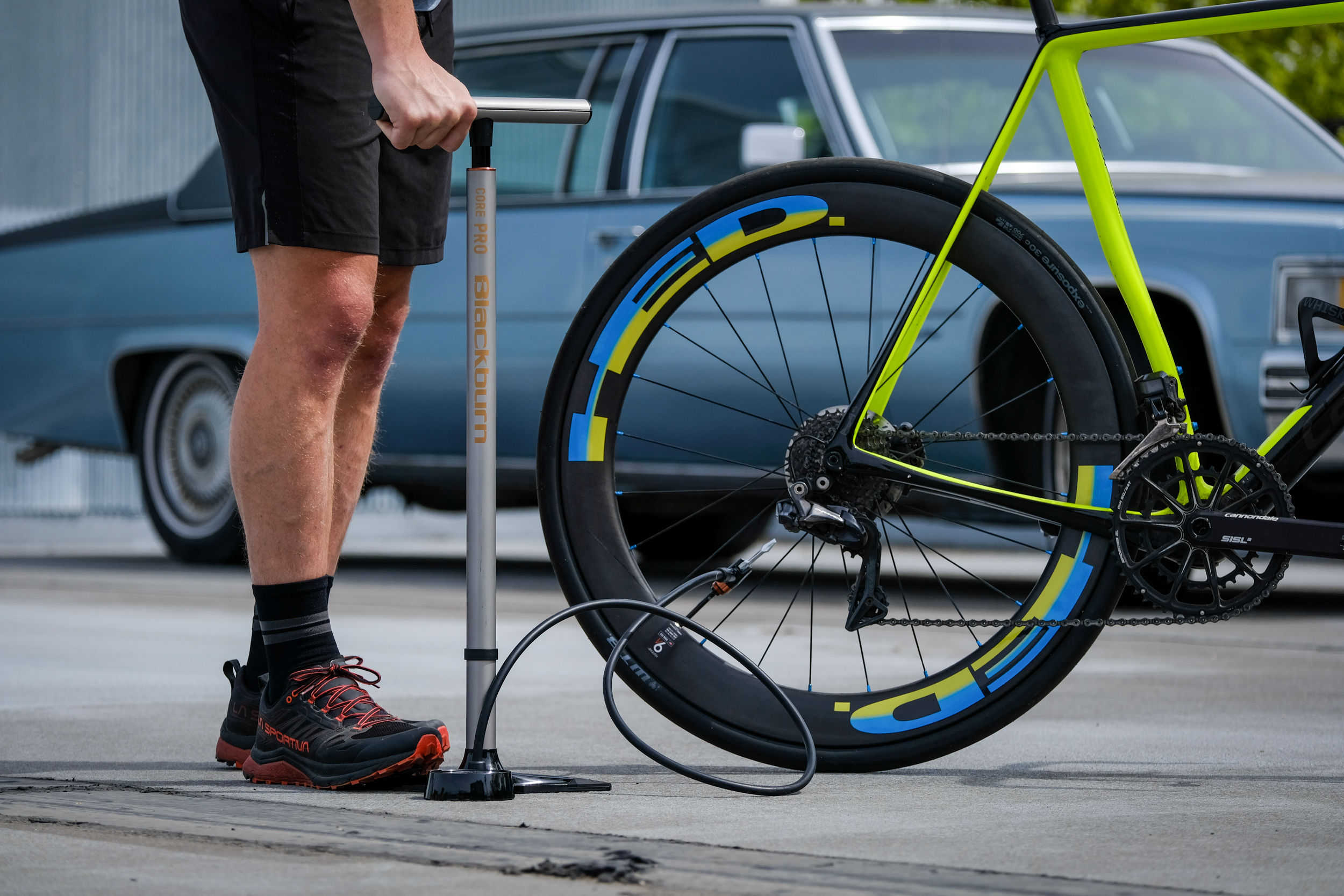
2) Floor pumps (track/stand pumps)
Best for: home/garage use, pre‑ride top‑ups, regular maintenance.
- Pros: large cylinder = fast inflation; tall body and wide base for stability; big, readable gauge; easier to reach high PSI for road tires; ergonomic handles.
- Trade‑offs: not portable; takes storage space; you won’t carry it on rides.
- Feels like: the grown‑up in the room—efficient, stable, accurate.
3) CO₂ inflators
Best for: race days, time‑critical fixes, minimalists who want speed.
- Pros: instant inflation; tiny and light; great for cold, tired hands.
- Trade‑offs: single‑use cartridges; learning curve to avoid over‑inflation; CO₂ leaks out faster than regular air, so you’ll still need a regular pump later; not eco‑friendly if used often.
- Feels like: a fire extinguisher—amazing in emergencies, not a daily tool.
4) Electric pumps (12V/USB/portable)
Best for: frequent inflation, multi‑bike households, e‑bike owners, riders with limited hand strength.
- Pros: push‑button convenience; digital gauges; preset targets; good for tubeless “seating” helpers if the unit has a burst mode.
- Trade‑offs: heavier, pricier; needs charging/power; noise; not always compact.
- Feels like: a tiny air station—very convenient if you have the space.
Key features that actually matter
Spec sheets can be noisy. Here’s the signal:
Valve compatibility (Presta/Schrader)
Most modern pumps handle both via dual‑head or reversible internals. If you run Presta on your road/gravel bike and Schrader on a city/kids bike, dual compatibility is non‑negotiable. Look for a head that locks solidly without chewing up valve cores.
Maximum pressure (PSI/bar)
- Road tires: often 70–110 PSI (4.8–7.6 bar), depending on width and rider weight.
- Gravel/commuter: typically 35–70 PSI (2.4–4.8 bar).
- MTB tubeless: often 18–30 PSI (1.2–2.1 bar), but it varies with tire width and terrain. If you ride multiple bikes, choose a pump that comfortably exceeds your highest target PSI.
Air volume per stroke
Bigger cylinders move more air (fewer strokes). For MTB and plus‑size tires, high‑volume is your friend. For narrow road tires, volume matters less than the ability to reach high pressure.
Gauge accuracy and readability
A big, legible gauge near eye level reduces guesswork. Analog gauges are robust; digital gauges are easy to read in low light. Check accuracy at common ranges (20–40 PSI for MTB, 60–100 PSI for road). A ±2 PSI error can change ride feel.
Hose and head design
A longer, flexible hose prevents awkward wheel dances. Smart heads (auto‑selecting Presta/Schrader) are convenient; lever‑lock heads feel secure. Replaceable gaskets add lifespan.
Materials and build
Metal barrels and bases improve stability and durability. Plastic can be fine for weight/price, but look for reinforced stress points. For mini pumps, metal internals and a swiveling hose reduce valve stress.
Portability and storage
Mini pumps mount to a frame or slip into a jersey pocket. CO₂ fits anywhere. Floor pumps need a corner but speed up pre‑ride routines. Electric units trade portability for convenience—great in a workshop or car trunk.
When and for whom each type shines
- The commuter or casual city rider: A compact mini pump plus a single CO₂ cartridge for “get‑home” speed. Keep a floor pump at home to check pressures weekly.
- The road cyclist: Floor pump with accurate gauge at home; a slim, high‑pressure mini pump (or CO₂) on the bike. Accuracy at 80–100 PSI matters here.
- The gravel explorer: High‑volume mini pump to seat a bead or manage mid‑ride adjustments; floor pump at home for precise fine‑tuning before long rides.
- The mountain biker: High‑volume mini pump that won’t twist your valve; consider a plug kit. If you run tubeless, a floor pump with a burst/charge chamber or an electric pump helps seat tricky tires.
- The family or multi‑bike household: Sturdy floor pump with dual‑valve head and a clear gauge. If you’re topping off bikes every weekend, an electric pump earns its shelf space.
- The racer/time‑crunched rider: CO₂ inflator in the saddle bag; floor pump in the garage. Practice once so you don’t blast the tube on race day.
Why a high‑quality pump pays for itself
A well‑made pump (think stable base, smooth stroke, sealed internals, precise gauge) turns maintenance from a chore into a one‑minute habit. Brands that focus on pumps—like Taiwan‑based specialists who supply OEM/ODM lines for bike companies—tend to nail the details: durable seals, accurate gauges, heads that don’t fight your valves. Over a season, that accuracy means fewer flats, better handling, and tires that wear as intended. Cheaper pumps often drift off‑spec or develop leaks; you end up second‑guessing every reading (or buying twice).
Bottom line: buy once, inflate happily for years.
Tips for use and maintenance
1) Hitting the right PSI. Use manufacturer ranges as a starting point, then tune by feel: softer for traction and comfort, firmer for speed and efficiency. Re‑check seasonally—temperature shifts pressure.
2) Protect your valves. Don’t yank the head off sideways. Unlock, pull straight, and cap Presta stems to keep grime out. A hose‑style mini pump reduces wobble and core damage.
3) Seat the bead (tubeless). A quick burst of air helps. Some floor pumps include a “charge” chamber; if not, an electric pump can assist. Use soapy water on stubborn beads.
4) Keep seals healthy. Dust and grit eat O‑rings. Wipe the head and hose after use; store pumps indoors. Every so often, refresh gaskets—many brands sell kits.
5) Read your gauge smartly. At low pressures (MTB), small errors matter. At high pressures (road), a few PSI changes feel big. Stand directly over analog dials; for digital, check battery health.
6) Build a simple routine: Quick squeeze test before each ride, proper top‑up weekly, full check after tire changes. That’s it. Consistency prevents mid‑ride dramas.
Choosing by scenario (cheat sheet)
- Small apartment, one bike: Compact floor pump with a small footprint; mini pump on the frame.
- Two bikes, mixed valves (kids + road): Dual‑head floor pump with big gauge; keep adapters handy.
- Tubeless gravel/MTB: Floor pump with charge chamber or electric pump; high‑volume mini for trails.
- Race/Gran Fondo season: Accurate floor pump you trust at 90–100 PSI; CO₂ inflator for flats.
- Commuter in all weather: Rugged mini pump, spare tube, tire levers, and a reflective patch kit pouch.
Conclusion: match the tool to your ride
The “perfect” pump isn’t universal; it’s personal. If your rides are long and remote, portability beats speed. If you juggle multiple bikes at home, a rock‑solid floor pump with a clear gauge saves time and guesswork. If you’re tuning tubeless or topping off several tires weekly, an electric pump might just be the stress‑free answer. Choose the pump you’ll actually use—because the best maintenance routine is the one that happens.
And yes, it’s worth investing in a quality option—durable materials, confident valve connection, accurate readings, and a smooth stroke. Do that, and yourbike pumpbecomes invisible in the best way—just a quick ritual before the fun part starts.
Quick FAQ
Q1: Do I need both a mini pump and CO₂? Not strictly. CO₂ is fast but single‑use; a mini pump is slower but unlimited. Many riders carry both—CO₂ for speed, mini as backup.
Q2: How often should I check tire pressure? Road: before every ride. Gravel/MTB: every few rides or when terrain changes. Commuters: once a week is usually fine.
Q3: What PSI should I run? Start with manufacturer guidance. Then adjust for tire width, rider weight, and surface. Softer on rough terrain for grip, firmer on smooth roads for speed.
Q4: Will an electric pump seat tubeless tires? Some will, especially those with a burst/charge mode. For stubborn beads, look for a floor pump with a reservoir or use a dedicated inflator.
Q5: Is a larger gauge always better? Larger is easier to read, but accuracy matters more. Check reviews and—if possible—compare against a known‑good digital gauge once to calibrate your expectations.
